Showing posts with label shutdown. Show all posts

Sunday, May 7, 2017

How to Prevent Electricity Disruption during Peak Summer Months

In many countries around the world, power shortages, blackouts, load shedding and unscheduled electricity interruption are common during peak summer months. There are several reasons why they occur, but perhaps two of the most prominent are the spike in power consumption among residents and businesses, and not having enough power supply.


During the hottest days of the year, it is not uncommon that residents, businesses, and industrial operations use air conditioning more often. In homes and offices, multiple air conditioning units usually run all at the same time at full power to cool the temperature and keep a healthy living or working environment. In addition, in many countries schools are on break during these months so children are likely staying at home and consuming electricity as they watch TV, play with their game consoles or surf the Web on their computers. These are just a few of the reasons why power consumption notably increases during summer months.

On the other hand, in some countries, especially those that rely on hydropower, the summer months also see a reduced availability of electricity supply due to drought, prolonged absence of rain and the drying up of water reservoirs. When electricity consumption went up while the supply gradually decreased, one could imagine that what would follow are more frequent power interruption, longer blackouts, and unplanned load shedding. This would, in turn, result in massive inconvenience among residents, hampered business operations and lower levels of industrial production.

Good thing interim power supply solutions are available. Many power utilities prevent the occurrence of widespread blackouts and power disruption during the peak summer months by hiring multi-megawatt temporary power plants.
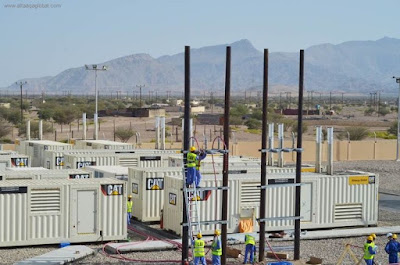

For instance, in the summer of 2013, the Sultanate of Oman hired a 24 megawatt (MW) rental power plant through the leading global temporary power provider Altaaqa Global Caterpillar Rental Power to boost its electricity supply. As the country needed an immediate solution to supplement its existing power supply, Altaaqa Global delivered the project in record-time, completing the installation, powering on and supplying electricity in just 96 hours. Altaaqa Global offered a complete turnkey power solution comprising power generators, transformers, fuel tanks, distribution panels, electrical accessories, and manpower – certified power engineers who will operate, manage and maintain the temporary power plant.

In 2014, Eneo, the integrated power utility provider of Cameroon, opted to partner with Altaaqa Global in installing a 50 MW natural gas power plant in Douala to increase its electricity supply and decrease the instances of power outages and load shedding in the city. Altaaqa Global’s gas power plants, comprising state-of-the-art power generation equipment, started supplying electricity after only 21 days from when the equipment arrived at the site. Till date, the gas power plants have been consistently producing reliable electricity to the residents, businesses, and industries of Douala.


Even as some countries may experience power supply limitation during the summer months, temporary power generation technologies are available to boost their electricity supply so they can prevent power outages and instances of load shedding. Temporary power plants are swiftly delivered, reliable and fuel-efficient, and does not require a huge capital investment. Power utilities can conveniently pay for the rented electricity from their operating expenses over a regular contracted period. Once the need for supplemental electricity passed, rental power plants could be easily demobilized, so no permanent power facility would be left unutilized or would require constant maintenance.

These are just some of the general benefits of choosing to rent power plants in times of short- to medium-term multi-megawatt power requirements. We invite you to talk to us to find out how temporary power plants can help solve your electricity challenges. Call us at +971 4 880 8006 or e-mail us at info@altaaqaglobal.com.


-Ends-


INQUIRIES
Altaaqa Global
Tel: +971 56 1749505

Sunday, August 28, 2016

Déjà vu: A Solution to the Philippines’ Looming Power Supply Crisis

The Philippines has achieved impressive economic growth numbers in recent years and has further reinforced its status as one of the major economies of Asia. Now, the country finds itself amidst a power crisis that may portend a pronounced economic slowdown.

In spite of the slow global economic growth, the Philippines remained a strong economic performer in Southeast Asia. A recent World Bank communiqué substantiates this when it reported that the Philippines’ near-term economic growth was likely to remain strong, and was projected to accelerate to 6.4 percent in 2016, before slightly tempering to 6.2 percent in 2017.


Despite the positive economic outlook, there is a persistent power shortage being experienced in key industrial and commercial areas in the Philippines threatening to fade the lights on this promising growth story. The power supply shortage is most pronounced during peak summer months when hydropower is reduced from the seasonal dry spell, and when a random shutdown of a power plant on the grid can initiate a disastrous widespread power outage. Yes, the Philippines is still grappling with rolling power outages similar to what bedeviled the country in the 1990s.

The Philippines has an enormous energy potential to free itself from the shackles of the power supply conundrum, given its notable geothermal energy capacity, if not for a slew of transmission and distribution limitations, inadequacy in domestic energy production and a challenging geography. Other aggravating factors include the country’s observed dependence on imported fuel, non-subsidy of fuel on the part of the government, high electricity tariffs, and aging existing power infrastructure.


While the Philippines has managed to continually achieve impressive economic growth rates in the face of its power supply challenges, the need for a resolution is growing ever more urgent. The country’s economic expansion, among other factors, has prompted a spike in its requirement for electricity, and now the Philippines’ electric power systems are struggling to keep up. The onus is now on its leadership and on key power industry stakeholders to prevent a power crisis that can negate the economic successes that the country has achieved in recent years.

A turning point

Industry and economic experts opine that the power supply shortage in the Philippines is part of a decades-old chronic insufficiency in the country’s power sector. They point to the country’s mothballing of its sole nuclear plant in 1986 as a vital reason why the Philippines is still struggling to satiate its national electricity demand. Because no new capacity was introduced to the country’s power network, what ensued were sustained day-long power outages that fended off foreign investment, suppressed the growth of various heavy industries and stalled the country’s economy. The incoming government of President Ramos (1992-1998) resolved the power challenge through emergency powers granted by the 1991 Energy Crisis Act to conclude contracts for new power generation. The country was, then, afforded some breathing room.

Now, 18 years on, the Philippines has come full circle and is again confronting a potentially debilitating power crisis.


What is being done?

One of the country’s foremost, albeit stop-gap, response to the power supply shortage is the “Interruptible Load Program”, which entails large establishments, such as shopping malls, office buildings, and factories, to voluntarily switch their power source from the main grid to their proprietary generators when a shortage is impending. It is a program established by the Department of Energy and the Energy Regulatory Commission to help ease the energy supply deficiency in the country until new capacities are introduced to the grid. As of press time, even as details of compensation are yet to be finalized, a number of large firms have already pledged their participation.

There has also been an interest on the part of the government to review, revise and reinforce the Electric Power Industry Reform Act (EPIRA) of 2001, which mandated the privatization of state-owned power enterprises in the hope of encouraging the availability of affordable electricity and fair market competition. The government intends to amend the EPIRA to allow it to intervene in the power sector as need be. For instance, the government proposes to have its own power generation facilities so that it is able to instantly fill in the power shortfalls. Nevertheless, the project still remains to be cost-prohibitive.


The country’s energy department estimates that, with the current economic trajectory, the Philippines’ power demand will balloon to approximately 29,500 MW in 2030. The country’s power generation capacity in the same year, however, is only predicted to be at 26,500 MW – 3,500 MW short of the requirement. Here’s the caveat: In order to bridge the power supply gap, the Philippines reportedly needs USD 46 billion to set up modern power generation facilities in the country. The government is thus taking a proactive stance to woo power investors to invest in the country and help increase its generation capacity.

Not helping this effort, however, is the country’s observed excessive bureaucracy and adherence to official rules and formalities. The energy department itself estimates that it takes approximately 165 signatures and a minimum of three years only to secure the necessary permits for a permanent power plant project. Further delays may ensue in case of an eventual judicial dispute. Other processes like finalizing financial concerns, signing off project designs, sourcing equipment and materials, securing allied service providers, let alone constructing the permanent power plant also take a considerable amount of time. Thus, many foreign power companies have expressed dismay over the situation, saying that the requirements have been a deterrent to entering a market demanding a sizeable initial outlay and a commitment of at least 20 years.


There is no better time

There is no better time for the Philippines to resolve its power challenges than now. The country cannot afford to invalidate its economic achievements of recent years by risking going through a similar power crisis that reined in its economic and industrial growth. If the country wishes to go on living its Cinderella story, the Philippines should do what it can to erase serious concerns about its economic and social sustainability.

While permanent power solutions require a substantial capital outlay, temporary power technologies do not involve capital expenditure. In fact, the government, power utility providers, and other interested industry holders can pay for the rented electricity from their operating incomes. Temporary power solutions may represent a short-term restorative measure, but when employed in crucial times like this, they can be the difference between a calamitous economic collapse and a momentous economic feat.


While the government is revisiting the EPIRA, and while concerned agencies are working to streamline their regulatory processes, the Philippines can readily benefit from the temporary power solutions, which can be swiftly delivered to the Philippines and installed and powered on in as little as days. Contrary to permanent power plants that require long lead times to be completed, rental power plants can immediately supply electricity as soon as the equipment arrives at site owing to its inherent ease of installation and grid connection.

Though recent governments have made great strides in the resolution of the power crisis, there are more to be done to ensure that the Philippines’ power-generation facilities are adequate to cope with the country’s increasing demand for electricity. Until the government and the relevant industry stakeholders encounter an appropriate solution to the persistent power supply challenges, the Filipino will continue to struggle with what has notoriously become a staple of life in the Philippines.

End

PRESS INQUIRIES
Altaaqa Global
Tel: +971 56 1749505

Sunday, April 10, 2016

Averting a Power Crisis: Is Curtailing Electricity Consumption the Best Option?

It seems logical, doesn’t it? If there was a hole in your boat, through which the water entered, what would you do? Plug it. If you lifted a box that proved to be too heavy for you, what would you do? Let it down a while, and unload a little. If you had colds, and it was making it hard for you to breathe, what would you do? Blow your nose.

The parallel couldn’t be clearer: If electricity was not enough, and consumption was outstripping the supply, what would a country, a province or a city do? Curtail the demand by all means, even if it means limiting work hours and mandating energy savings. But, does it really solve the problem, or is such a solution merely palliative?


Many hydropower-dependent countries around the world are facing an electricity shortage, owing to prolonged droughts brought about by the El Nino weather phenomenon. The absent or extremely low rainfall levels is choking off hydroelectric dams essential for supplying a lion’s share of the countries’ electricity resources. Because the countries’ power generation is severely hampered, governments and utility providers are forced to implement drastic electricity-conservation measures to make do in the face of the energy challenge.

Aside from load shedding and peak shaving, some countries have started rolling out a mandatory additional day-off for certain sectors, in an effort to control power consumption. While some employees welcome such directives, others are feeling apprehensive. Marta, 45, government employee, shares her thoughts. “I should be happy that I have more time to catch up on sleep and play with my kids, but I am worried about our productivity.” Just a few months ago, Marta’s office cut the working time short by two hours. “A lot of things are not getting done, because we were only working for six hours a day for five days. I cannot imagine what happens now that we will only be working for four days.”

Economists share Marta’s perspective, when they said that decreasing the number of working hours and shortening the work-week for government offices and private companies could worsen the countries’ already reeling economic performance. They said that the implementation of such measures could bring about devastating effects to the countries’ economic productivity, already depressed from the power crisis.

Alberto, 51, restaurateur, does not subscribe to the four-day work-week. “I cannot afford to have my restaurant closed for three days a week. It’s just not possible from a business stand-point.” Unfortunately, Alberto’s restaurant is in front of Marta’s office, so the four-day work-week affects its footfall. “Most of my customers are from that office. They take lunch here, and used to take something out for dinner. When they started working for two hours less, most of them stopped ordering for dinner, but at least they still eat lunch. Now, that they are off for three days, I don’t know how I can fill up the seats.”

Power-conservation measures, such as shortening work-hours, may have merits in immediately controlling electricity consumption, but there could be productivity-related drawbacks underneath the surface. As most businesses and industries need electricity to be productive, requiring them to suspend operations to save on power may be counter-productive to a certain extent.


In times when a country’s power generation is no longer enough to support the demand, governments and power utility providers may find benefit in turning to temporary power solutions to urgently supply the necessary electricity.

By having temporary power solutions on board, governments and power utilities need not spend scarce resources on capital purchase, which is usually the case when building permanent power plants, or refurbishing/rehabilitating old permanent power stations. Moreover, governments and power utilities can pay for the electricity produced by the hired power plants from their operating revenues. Hiring temporary power solutions also brings considerable cost savings, owing to the efficiency and reliability of temporary power technologies. Governments and power utilities will be able to save on fuel- and maintenance-related costs, vis-à-vis running or maintaining dated permanent power facilities.

Temporary power plants are flexible in power and voltage, and their capacity can be increased or decreased according to demand, so governments and power utilities can choose to add power modules as the requirement for power increases. Readily available and rapidly deployed and installed anywhere in the world, they temporary power plants are able to function in virtually any locations, including in areas where traditional power infrastructure, like grids and substations, is outdated, damaged or absent.

Temporary power plants are capable of supplying reliable electricity while droughts persist. As soon as the weather conditions improve, and dams have enough water to generate sufficient electricity, governments and power utilities can simply end the contract, and the temporary power solutions will be demobilized, leaving no idle permanent infrastructure or equipment.


Power supply insufficiency adversely affects big and small businesses alike, like Alberto’s restaurant; government services, as in the case of Marta; and an entire country’s economy. Persistent power outages result in hampered economic productivity that reins in the development of any country. In times of power-related challenges, such as drought for hydropower-dependent countries, temporary power technologies can supply the necessary electricity to keep businesses and industries going, while natural conditions eventually turn favorable.

End

PRESS INQUIRIES
Altaaqa Global
Tel: +971 56 1749505
rbagatsing@altaaqaglobal.com

For more information on temporary power solutions, visit: http://www.altaaqaglobal.com


Sunday, June 14, 2015

How Has Eskom Handled Power Crises Through the Years?

South Africa has been facing a power supply challenge since 2008. Regular power outages have become part of the lives of the residents of the country, owing to decreased generation capacity and ongoing planned and unplanned maintenance. Add to this the ever-increasing demand for electricity spurred by rapid population growth and lifestyle changes, as well as seasonal requirements.


Eskom said that it needed to complete scheduled maintenance works on the power infrastructure to minimize the chances of unplanned power cuts. It further claimed that it only implemented load shedding to protect the power system from suffering a complete failure.

This, however, is not the first time that Eskom has encountered such challenging circumstances. It would be interesting to have a look at how the power utility approached the same scenario in the 50s and 70s compared to today.

World War II

After the Second World War, the then Escom had to deal with an escalated demand for electricity. Thus, electricity consumption had to be restricted to avoid a consequent damage to the economy of South Africa, and key power stakeholders worked to gain access to additional power generation and transmission equipment.

Between 1945 and 1955, Escom reported that the capacity of its power plants grew twofold, and estimated that it would double again in the decade that followed. In the decade beginning in 1950, Escom commissioned 10 new power stations, among which were the small coal power plant in Hex River and the Taaibos and Kelvin stations.

1960s and 1970s

When South Africa faced another power crisis in the 60s and 70s, Eskom’s response was to build myriad power stations till the 80s. To support Eskom’s effort, the government of South Africa intervened at the policy level, creating special action committees and introducing new regulatory systems.

Today

Experts believe that the South African government and Eskom have to show more resolve in dealing with the present energy crisis.

When load shedding was re-implemented earlier this year, the government said that the foremost reason for the supply insufficiency was the growing energy demand brought about by an expanding economy.

Industry insiders, however, believe that Eskom should not have found itself in such a challenging predicament had it heeded the warning of the Department of Minerals and Energy (DME) in the late 90s, which said that at the rate of the annual growth in demand for electricity in the country, South Africa’s energy supply would be outstripped by 2007. It added that decisions about building additional electricity generation capacity should be taken by 1999, but instead, owing to a variety of reasons, Eskom waited until 2004 before making a resolution on constructing new power plants.

The Roadmap Ahead

Now, the onus is on the government, Eskom and key stakeholders to find a viable and sustainable solution to South Africa’s power supply challenges. Building additional electricity generation capacity through the construction of new power plants may be a permanent solution, but its completion may take several years, even decades.

Rental or temporary power plants may be able to help South Africa boosts its electricity supply now that it needs it. Rental power plants can be installed in a matter of days, and can provide the exact amount of power that South Africa requires. They can be shipped from and to anywhere in the world, and can be installed and commissioned in no time, as they do not require additional power infrastructure to be constructed to run. They come as packaged systems, so once they are plugged and played, they are good to go.

Moreover, since temporary power plants are hired, South Africa need not shell out a huge capital for their construction and subsequent maintenance.

The key to the resolution of South Africa’s energy woes may not lie on one single technology. To resolve the crisis, the country and its utility providers should tap the potential of all solutions on offer. In this way, South Africa will be provided with a reliable and sustainable source of electricity and avert future energy supply challenges from occurring.

End

PRESS INQUIRIES
Robert Bagatsing
Altaaqa Global
Tel: +971 56 1749505
rbagatsing@altaaqaglobal.com

Monday, April 27, 2015

There is Power in Foresight

Electric utility providers in developing countries, where load shedding is common, may be able to gain valuable information on the health of their areas’ power systems through advanced analytical tools available today.


Though utility companies have always employed analytics to a certain degree, the data they gather from power plants, transformers, generators and other equipment only reflect those that have already happened. Industry experts agree that making operational decisions based on historical data is ineffective and may lead to false conclusions.

By relying on historical data, the decision-making process of utility companies becomes more reactive than proactive. Let’s take the health of power plants as an example. Many of the power plants operating in developing countries are well beyond their lifespans, and the constant increase in demand for electricity puts more pressure on these dated facilities. As a result of the overwhelming requirement, these power plants often break down, forcing utility companies to perform unplanned maintenance activities. However, because the unexpected breakdown is outside the maintenance cycle in vigor, utility companies usually choose to delay the operation and “sweat” the facilities even more. Professionals knowledgeable in power systems will agree that “sweating” assets will only increase the chances of breakage, higher maintenance costs and sub-par performance.

The latest technologies in advanced analytics allow utility providers to plug the gathered data into a statistical model, which is capable of scientifically predicting future scenarios based on operational events that have already occurred. This will, then, enable utility providers to make proactive decisions that will help regulate the electricity supply and plan maintenance schedules. Using the forecast, utility companies will be able to estimate the electricity demand and supply per area and per season. When, for example, they ascertain a potential gap in demand, they can take the proactive step of introducing other sources of electricity, like temporary power plants, into the energy mix.

If load shedding is really unavoidable, having advanced analytical tools will allow utilities to effectively manage and communicate planned outages. From the statistical information available, utility providers can determine critical operation times for industrial and commercial companies, so that they can work around the schedule in such a way that the planned power outage will have the least impact on these entities’ business operations. For instance, they can collaborate with rental power providers that will provide the necessary power to industrial and commercial zones during the hours when the permanent facilities aren't able to generate enough electricity.

Today’s advanced analytics systems are more accessible, because the latest technologies provide for plug-and-play operations, even for non-specialists. They use a considerable degree of artificial intelligence to meet the requirements of modern-day businesses and utilities. This allows them to make proactive decisions that will ultimately save them time and money, and optimise processes and resource allocation.

End

PRESS INQUIRIES
Robert Bagatsing
Altaaqa Global
Tel: +971 56 1749505
rbagatsing@altaaqaglobal.com

Saturday, April 11, 2015

How to Troubleshoot a Power Outage

There is no doubt that a power outage is a huge inconvenience. The possible reasons for a power supply interruption may be varied; there are those that you can fix at home, while there are some that may take days or weeks to solve. Here is a short step-by-step guide on how you can solve a power supply problem at home.


But, first…

Make sure you never touch the breaker panel or fuse box with wet hands or while standing on water. Also, do not use any tools to flip breakers or replace busted fuses; these can be simply done by hand. Make sure you use a flashlight while doing the troubleshooting. It is also helpful to keep the local contact number of your electric company handy.

•Is it just in your home?

When you sense that your house has lost electricity, investigate whether the outage is only limited to a certain part of your home. If you find out that electricity is not functional in your entire home, look outside and check if your neighbors have also lost power.

•Call the utility provider

When you have made sure that the power outage affects other houses or streets as well, it is time to call the local utility company to report the problem. Turn off light switches and unplug electrical devices to protect them from power surge damage when the electricity supply is restored.

•The power problem is limited to your home  

If, however, you find out that electricity is interrupted only in your home, or in certain parts of it, you may need to take a look at GFCI receptacle, circuit breaker, main breaker or fuse box to troubleshoot the outage. On a GFCI outlet, try pushing the reset button, or see whether a breaker has tripped or a fuse has blown.

•The main breaker trips or branch breakers can’t be reset

At this stage, try to turn off or unplug as many electrical appliances or electronic devices throughout your home. At the circuit breaker, flip all the breakers off. Then, turn the main breaker switch on and off several times. After this, try to reset each of the breakers one at a time. If doing this causes the main breaker to trip, or if you are unsuccessful in resetting one of branch breakers, there may be a problem with that circuit, which will need electrical repair.

•If branch breakers reset and main breaker does not trip

If you find no trouble resetting the branch breakers and the main breaker does not trip, the problem may be attributed to a faulty appliance. Try to connect them one by one to find out which of your appliance is damaged.

•If the main breaker trips repeatedly

If this happens, the problem may be that you are running a large number of appliance at the same time, drawing current beyond the main breaker’s capacity. Try to reduce the electrical load of your home or have a professional electrician upgrade your home’s electrical panel.

For bigger power outages….

Of course, some power outages are caused by bigger problems, like natural disasters or power plant shut downs, and will require steps more technical and specialized than flipping switches on and off to fix. While waiting for widespread power interruptions to be fixed, there are temporary power plants that are capable of immediately providing electricity at the time when the conventional electricity sources fail. They can be delivered anywhere in the world, installed in a matter of days and powered on to supply the exact amount of electricity that a city, a province, a region or a country needs. They are cost-effective, and constitutes a sound preventive measure to counter the devastating effects of power cuts due to load shedding, peak lopping, blackouts and calamities.

Power outages, no matter the duration, extent or reason, can cause interruptions to vital residential, commercial or industrial processes. While small-scale outages can be easily handled at home, or by your local utility company, large-scale ones may entail the use of much newer technologies and the application of more sophisticated techniques and processes. While work is being done to restore power, rental power plants can supply the much needed electricity anytime and anywhere it is required.

End

PRESS INQUIRIES
Robert Bagatsing
Altaaqa Global
Tel: +971 56 1749505

Sunday, September 28, 2014

Keeping Data Centers Dynamic

With hundreds and thousands of dollars at stake in every shutdown, what can one do to keep data centers running? Our continuing feature on industries most affected by power interruptions.


The data center constitutes one of the most critical operations of many modern companies. As the amount of information shared within and outside today’s companies increases, the complexity and criticality of data center operations heightens. In fact, the significance of a data center operation is so high that according to the 2011 National Study on Data Center Downtime the mean cost for any type of date center outage is a whopping USD 505,502. Fleshing out the information, the study cites that in a partial outage, the cost of damages amounts to USD 258,129, while in a total shutdown, USD 680,000.

Because the cost of downtime is so steep, availability of IT capacity is usually the most important criterion on which data centers are evaluated. The efficiency of data centers, in terms of both energy and management resources, is also constantly being improved, and research and development efforts of companies industry are increasingly being geared towards refining data center flexibility and cost-effectiveness.  Best practices in data center design, operation and maintenance have also been developed and studied, and huge IT-related companies like Google no less have published tons of literature to spread the most up-to-date knowledge.

Making all the advancement in the data center industry possible is, of course, electricity. The availability of a reliable supply of electrical power has been the driving force of most modern industries, from manufacturing, oil & gas, petrochemicals, mining, transportation to information technology, that a momentary loss of electrical energy can spell catastrophic consequences for them. As was described by the study quoted above, a data center shutdown can cost hundreds of thousands of dollars, and may cause long-term damages and negative consequences not only on equipment, but also on operations and transactions that depend on data centers.

In conjunction with energy efficiency and operational flexibility best practices, hiring the services of temporary power providers can prove to be a beneficial initiative, particularly in cases of emergency. Interim power plants can act as back-up electricity sources in times of natural calamities, like hurricanes, earthquakes, tsunamis and flooding, which hold the grim possibility of affecting the electrical power supply in the affected areas. In case rental power plants are not yet installed when disasters strike, they can easily be deployed from virtually any point on Earth to another, thanks to their modularity. Once they arrive at the location, they can swiftly be installed and commissioned, owing to their adaptive design and plug-and-play configuration. They are able to supply the exact amount of power needed by the client, as they are flexible and infused with state-of-the-art protection systems.

In terms of finance, utilizing temporary power plants represent cost-efficiency, when compared to the projected amount of losses that can be incurred in cases of data center outages.

I these times of intensified globalization and inter-connectivity among businesses and different industries, data centers play an invaluable part in keeping the information gateway open and beneficial to all parties. As their role amplifies and expands in coverage, protecting data centers from possible blackouts and consequent damages is more vital than ever.

End

PRESS INQUIRIES
Robert Bagatsing
Altaaqa Global
Tel: +971 56 1749505
rbagatsing@altaaqaglobal.com

Sunday, September 21, 2014

Ensure the Cure

It is important to keep pharmaceutical products at the right temperature all the time. The continuation of our ongoing series on industries most affected by power interruptions…


Keeping medicines and other pharmaceutical products at the optimal temperature is important in ensuring that they remain effective and capable of saving a patient’s life and health. Insulin, for instance, might lose its effectiveness the moment it is exposed to temperatures below 0°C. Other pharmaceutical products, like cortisone creams, can be rendered useless by exposure to temperature above 35°C.

As a testament to the salience of the concern, industry authorities like the US Food and Drug Administration (US FDA) and the European Medicines Agency (EMA) have defined two main temperature ranges for the climate-controlled transportation and storage of pharmaceutical products: Two to eight degrees Celsius for cold chain products and 15°C-25°C for temperature-controlled products.

While it is ideal that temperatures as prescribed are maintained during manufacture, storage and transportation of pharmaceutical products, there may be cases that can cause extreme aberrations. One of them is when power supply is interrupted, either from planned or from unexpected circumstances. Electricity outages can be caused by several reasons, including plant shutdowns, overloaded facilities, peaks in seasonal demands, natural calamities and operational errors, among others. Whatever the cause of interruption is, it is important for pharmaceutical companies and other allied entities to be prepared and proactive in case of power-related problems.

One of the most efficient ways to prepare for and counter the effects of a blackout is to engage the services of temporary power providers. Rental generators represent a cost-effective and rapid solution in times when power is cut off. With interim power plants, the temperature across the pharmaceutical cold chain can be maintained, and temperature abuse can be avoided. Because temporary power stations are relatively affordable compared to constructing dedicated permanent electrical energy plants on site, pharmaceutical companies and their allied entities can procure the systems without needing to dent their budget allocations for a particular period of time. Since rental power plants are operationally efficient when used temporarily, the cost that will be involved running them will largely be lesser than the lost profit, opportunities, production time and raw materials should pharmaceutical firms stay without power. Because mobile generators are flexible and scalable, their output can be fitted to the exact requirement of the customers, precluding the chances of over- or under-sizing.

Nowadays, medicines have become part of the world population’s basic necessities. With the delicate illnesses that are now existent, like HIV, Ebola and MERS, to name a few, pharmaceutical products are highly essential to keep people healthy and to prevent the spread of deadly ailments. Temporary power plants can help supply the necessary electricity in times when dependable, sustainable and viable power is crucially needed, as in maintaining the prime temperature for medicines and pharmaceutical products.

End

PRESS INQUIRIES
Robert Bagatsing
Altaaqa Global
Tel: +971 56 1749505
rbagatsing@altaaqaglobal.com

Wednesday, August 6, 2014

Power to grow sub-Saharan Africa’s economy

While achieving a buoyant economic climate is a feat in itself, the real challenge lies in staying afloat. To sustain the economic optimism that Africa is now enjoying, it is imperative that governments, particularly in sub-Saharan Africa, address the critical issue of chronic power shortage, which hampers the development of various industries in the region.


Africa has remained resilient in the face of the economic headwind of the previous years. This was the good news delivered by the African Development Bank (AfDB), which recently presented the African Economic Outlook 2014 in its annual meeting in Kigali, Rwanda. Africa’s economic growth, the continent-wide document suggested, was expected to reach 4,8% in 2014 and 5,7% in 2015, on its way to hitting the same numbers as it had before the 2009 economic downturn. The economic expansion, the report indicated, would be driven by domestic demand, infrastructure and a heightened continental trade in manufactured goods. Moreover, the report revealed that direct and portfolio foreign investments were projected to reach US$80-billion in 2014, and financial flows towards the continent were predicted to surpass $200-billion – four times its year 2000 level.

The above-mentioned growth projections bode well for the entire continent, and AfDB suggested that in order to sustain the momentum and achieve economic sustainability and a development breakthrough, Africa would need to participate more actively in the global production of goods and services. In this way, added AfDB, the continent could boost its economic diversification, domestic resource mobilization and investments in critical infrastructure.

Is there enough power, though?
Since the industrial revolution, power has always been identified as a key factor in encouraging economic growth, and that still holds true today. In the light of Africa’s ambition of achieving economic sustainability, diversity and viability, the continent needs to ramp up its production and industrial activities, and to achieve that, it needs the staying power. The question, however, is “does the continent have enough energy supply to power its way to the future?”

Though the International Monetary Fund (IMF) concurred with AfDB, it sounded a caveat when it said that the observed power supply deficiency in the continent may rein in economic growth. It has been documented that some 25 countries in sub-Saharan Africa were facing an energy crisis, evidenced by rolling blackouts, and that some 30 countries in region had suffered acute energy crises in recent years. While the Key World Energy Statistics by the International Energy Agency reported that electricity generation in Africa rose from 1,8% in 1973 to 3,1% in 2011, the continent still remained to have the smallest share globally, despite being the second most populous continent.

Nigeria, for instance, a country that has three times the population of the South Africa, only has one-tenth of the power generation capacity of the latter, and enterprises are already complaining about regular power interruptions. In Tanzania, a month-long blackout was experienced in Zanzibar when the underwater cable lines supplying power to the archipelago failed, following a surge in demand. As a result, residents were paying $10 daily to run diesel powered domestic generators, while businesses requiring refrigeration or heating had to suspend operations until the power was restored. In Kenya, it has been observed that only 25% of the population had access to electricity, and that only 5% of the country’s rural areas had access to the grid. The occasional recession of the water level in some of Angola’s rivers affects power production, disturbing other services, like water distribution. Luanda’s water supply firm, EPAL, cited that various areas in Luanda experienced water supply shortage, owing to challenges related to power distribution.

Touted to be Africa’s biggest copper producer, the Democratic Republic of Congo (DRC) advised mining companies in the country to suspend any project expansion which would require more power, due to a power shortage that, the government said, would take years to resolve. While the country would reportedly institute an electricity-rationing program, mining companies were encouraged to postpone signing new contracts, in an effort to slowdown the growth of electricity demand in the country. Even the region’s largest economy, South Africa, was not exempt from power-related woes. In fact, in a recent communiqué, Eskom, supplier of 95% of the country’s electricity, warned residents of a rolling blackout due to load-shedding, which it said, was to protect the electricity grid from total failure. Eskom said it had begun scaling down maintenance to prepare for winter, but in the face of a rising demand, particularly during peak hours, it appealed to the public to reduce power consumption by at least 10%. If the power demand does not decline, then, the company said, load shedding would be the last resort to avoid a total power shutdown.

With Africa’s population expected to double to approximately 1.9 billion people by 2050, the World Bank said that a much higher investment would be needed to at least double Africa’s current levels of energy access by 2030. In fact, it is estimated that the sub-Saharan region would require more than $300-billion in investments to achieve total electrification by 2030.

Boosting energy
As a response to this pressing need, countries in the region are mapping out strategies to supply more energy through alternative solutions. In the DRC, for instance, the Grand Inga hydroelectric project, expected to boost the country’s power supply by 44 000 MW, is said to be gaining traction, while in Zimbabwe upgrades to the Kariba South hydropower and the Hwange thermal coal plants, forecast to add about 300 MW and 600 MW, respectively, are reportedly in the pipeline. South Africa is also reported to be cooking up the building of two new coal-fired power stations at Kusile and Medupi, expected to individually add approximately 4 800 MW of capacity.

The afore-mentioned initiatives are a testament to the tremendous attention that these countries are paying to their respective power generation challenges. Governments and private entities alike have been putting years’ worth of research and investigation, and billions worth of investment, to draw up the myriad adverse economic and social effects of electricity supply deficiency. A crucial element in the equation, however, is time, and in a world governed by more stringent business practices, faster turnarounds and heightened interdependency, the essence of time transcends chronos. Today, time may mean the difference between profit and loss, between political unrest and stability, and between economic growth and uncertainty.

The price of power: Focus on Southern Africa
Southern Africa was observed to have absorbed the blow of the power crisis in recent years. Blackouts brought cities to a standstill and spelt terminal financial losses to small- and medium-size companies. One of the region’s flagship industries, mining, was also unfavorably affected, prompting mining companies to halt expansion plans and repress local power usage. When Eskom deemed to cut down its electricity export to support its power demand at home, the electricity supply in Botswana, Namibia, Mozambique, Lesotho, and Swaziland, countries that import power from South Africa, was severely affected.

The foregoing, however, was not unexpected. In 1998, the government of South Africa apparently acknowledged the necessity of investing in electricity infrastructure amidst the threat of a power crisis looming large. It deemed, therefore, to privatize Eskom to inject new capital, thus encouraging a ramp up on its efficiency. The finalization of any agreement, however, was reported to have taken longer than expected, and by 2008, the utility found itself unable to support the then-existing power demand.

Other governments in the region were said to have admitted to underestimating the trajectory of power requirements. In 2008, Botswana Power Corporation said that the energy forecast was skewed by the proliferation of new mines, which meant a steep spike in power demand, not only in Botswana, but also in other countries, such as Zambia.

At present, solutions are underway – but they, naturally, will not come cheap. Economic reports indicated that, at the prevailing growth rate of the demand from industries and residents, the region would have to double its power generating capacity by 2025, at an approximate cost of $171-billion in South Africa alone. Of that amount, $45-billion would supposedly have been needed before 2013.

In order to sustain this projection, the governments have identified potential sources of funds, such as approved power rate hikes and foreign investment. Yet, power hikes could stir alarm and protest from the citizens and trade unions, and could prompt industrial entities, like mining corporations, to cut down on operations, putting jobs and production at risk. Foreign investment agreements, on the other hand, could take time to materialise, and the planning, designing, installation and commissioning of alternative power generation projects may entail years, if not decades.

Bridging the power gap now
Unstable electricity production and regular power interruptions bring about a multitude of negative impacts to any country’s economy, business and citizens. In today’s world, power has become a fundamental element for any economy to function, as every sector of the modern society, be it domestic, commercial or industrial, is heavily dependent on electricity. Nowadays, a power interruption affecting critical facilities, such as hospitals, airports, telecommunications towers, data centers, mining facilities and oil & gas installations, has the potential to put an entire country, region or city to a standstill, and in light of globalization, the consequences could transcend national or regional borders.

Hiring interim power generation plants to bridge the gap between the demand and the supply of electricity yields many advantages, particularly when there is a foreseeable delay in the fruition of permanent power generation facilities or when the temporary power is immediately needed. It was clear in the above-mentioned examples that countries in sub-Saharan Africa are looking to mitigate the observed deficiency in power supply by upgrading existing facilities, soliciting foreign investment to build new power plants and harnessing the potential of alternative sources of energy, including geothermal, solar, hydro and nuclear. While the aforementioned initiatives have recognized and acknowledged merits and potential, they may require further research, planning, designing and legislation, and additional physical facilities to be operational; and this takes time.

When time is of essence, rental power companies, like Altaaqa Global CAT Rental Power, are capable of providing solutions as needed, when needed. Utility companies in the region, can hire temporary power plants in times when demand outpaces the supply, when the electrical grid is unstable or when power distribution networks are unavailable, like in the rural areas. This will allow them to bridge the supply deficit without waiting for another day. Hiring power generators can prove to be a viable solution to power supply inefficiency, bridging the power gap while the permanent power solution is still in progress.

Powering the way to the future
The world welcomes the positive outlook of Africa’s economy. The continent that was once regarded as a tailender in terms of development, is now making an aggressive move towards economic stability and viability. While achieving a buoyant economic climate is a feat in itself, the real challenge lies in staying afloat. To sustain the economic optimism that Africa is now enjoying, it is imperative that the governments, particularly in sub-Saharan Africa, address the critical issue of chronic power shortage, which could hamper the development of various industries in the countries. The effort that the region’s governments are applying to address this predicament is commendable, but there exist other entities which can help them to further alleviate the situation. Rented power addresses the issues of urgency, cost-efficiency, reliability, energy-efficiency and environmental safety. In recognition of the indispensable role of electricity in today’s modern society, it is advisable that utility companies provide for a contingent power solution in cases of power interruption that may lead to operational delays and, ultimately, negative social, economic and financial consequences.

END

* The foregoing article was published in the June 2014 issue of Energize (EE Publishers, South Africa). To read more: http://bit.ly/1pTKEgj *


PRESS INQUIRIES

Robert Bagatsing

Altaaqa Global

Tel: +971 56 1749505

rbagatsing@altaaqaglobal.com