Showing posts with label oil. Show all posts

Sunday, May 14, 2017

The Evolving Role of Temporary Power Plants

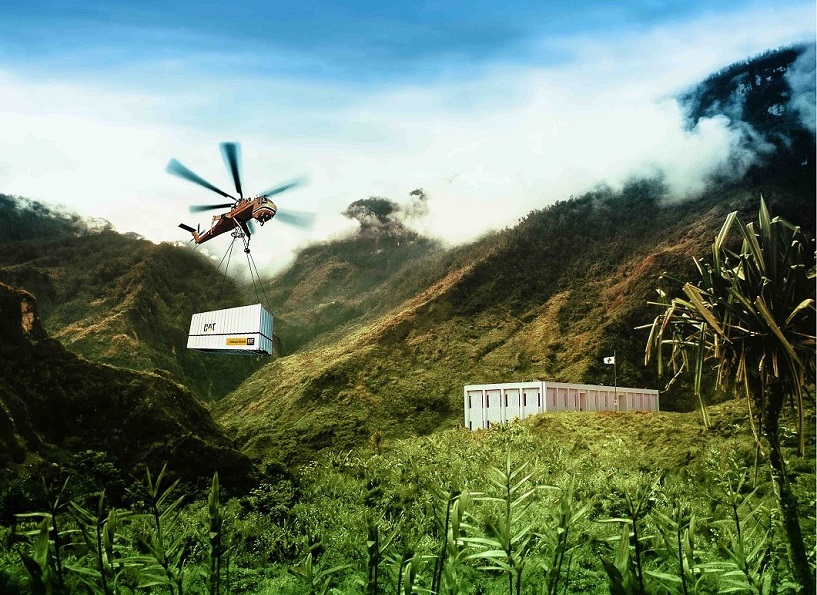
Temporary power plants are among the most popular solutions to provide electricity to communities, events, businesses and industries around the world. Temporary power plants can be quickly delivered, installed and powered on, and they do not require a huge capital expenditure on the part of the customer. They are efficiently managed and maintained by the engineers and technicians of the temporary power provider, and can be completely demobilized at the end of the contract.

It is easy to think of temporary power plants in short-term projects of a few megawatts, like in sporting events or concerts. But while temporary power providers cater to such requirements, their scope is more extensive than just “temporarily” providing electricity.


In recent years, the role of rental power plants has transcended being merely “temporary”. The industry is now witnessing projects with contracts of longer duration and of capacities that, at times, can make up a sizable fraction of the grid’s demand. Rental power plants are increasingly being utilized in baseload operation, and modern rental power plants are now able to perfectly integrate with the existing permanent power infrastructure. In certain applications, rental power generation technologies are supplying electricity to entire cities or provinces, or even countries, and are powering thousands of businesses and millions of people.

Rental power suppliers, like leading global rental power company Altaaqa Global Caterpillar Rental Power, are primed to serve projects with longer contract durations and of multi-megawatt capacities. They are able to cater to multi-year, larger-scale requirements from a wide range of industries, including utilities, oil & gas, mining, and manufacturing, to name a few. They are able to supplement a country’s grid capacity; provide on-site power for oil & gas and mining facilities; and supply electricity to process industries, for example.


Let us take a close look at utilities. Utility providers around the world partner with rental power providers for a variety of reasons. They seek the assistance of rental power suppliers when they need a speedy supply of supplemental electricity. Utility providers also collaborate with rental power companies in times of significant power supply constraint, like in hydropower-dependent countries or cities in times of drought or low-rain seasons. Utilities also avail of rental power services while waiting for permanent power plants to be completed, or when they are still in the process of raising capital for the construction of facilities or the expansion of existing grid supply. There are also utilities that hire power plants in times of seasonal shifts in electricity demand, for instance during summer.

On the other hand, mining and oil & gas facilities, being remote from the national grid, hire power plants to provide electricity at every stage of their operations throughout their lifetime. Rental power plants support the electricity needs of mining and oil & gas facilities from the nascent stages up to the most power-intensive processes. Thanks to the scalability of rental power plants, their capacities can be increased (or decreased) according to the needs of the sites.


Process industries, like consumer and industrial manufacturing, turn to rental power not only to provide electricity to their facilities during peak production season but also to ensure the reliable supply of electricity, especially in areas where load shedding is implemented and power outages are frequent. With rental power plants consistently power their operations, manufacturing companies can fulfill their production commitments and delivery obligations to their customers.

As the world’s economies grow, electricity demand will continue to increase and electrification efforts will only intensify. In recognition of this trend, rental power providers, like Altaaqa Global, are continuously working to further improve the technologies of their systems in order to cater a wider range of power requirements of varying contract duration and capacities.

If you have a multi-megawatt rental power requirement, talk to us to find out how our rental power plants can work for you. E-mail us at info@altaaqaglobal.com or at sales@altaaqaglobal.com. Alternatively, you can call us at +971 4 880 8006.


-Ends-


FOR INQUIRIES
Altaaqa Global
Tel: +971 56 1749505
jsanchez@altaaqaglobal.com

Wednesday, May 10, 2017

The Top 5 Economic Benefits of Hiring Multi-Megawatt Power Plants

An increasing number of industrial companies and businesses around the world are looking for various means to streamline their operations, minimize operating costs and improve their bottom line, and at the same time maintain their competitiveness.

One area in their operation that industrial companies and businesses can optimize is their energy supply and usage. It is essential that industrial companies not only manage their power utilization and energy efficiency but also assess the cost of their principal electricity source, be it from the national grid or from their own power generation facility. This is particularly critical for industrial companies operating in locations remote from the national grid, like manufacturing plants, mines, and oil & gas facilities. These companies should keenly evaluate the cost benefits of various available power supply solutions, among which are purchasing their own power generation facilities or partnering with a multi-megawatt temporary power provider.


There are several factors that come into play when choosing an appropriate power supply solution. Aside from cost, there are other considerations like timing, duration of requirement, availability of manpower and know-how, and associated servicing and maintenance. At first, investing in a proprietary power generation facility may seem optimal, but industrial companies and businesses need to closely evaluate the merits of all options available.

Here is a run-down of five of the most notable benefits of renting multi-megawatt power plants:

1. No need for large capital expenditure

When industrial companies and businesses choose to hire multi-megawatt rental power plants, they will avoid making large capital expenditure and will not be constrained to commit a significant amount of their company’s working capital to a fixed asset (in this case, a power plant). This proposition will improve their cash flow and facilitate their financial forecasting because they can pay for the rented electricity from their operating expenditure over a guaranteed payment schedule.

In addition, renting multi-megawatt temporary power plants offers the flexibility to increase or decrease the power capacity, or extend the rental period, if required.

2. Avoid associated costs

Industrial companies and businesses should be aware of the associated costs involved in purchasing a power plant. Among these are insurance, spare parts, and ancillary items, among others. These are unavoidable additional purchases they need to make to ensure that the power plant is efficiently working and delivering the desired amount of power.

In the case of rental power plants, all spares and ancillaries are taken care of by the temporary power provider, making budgeting and financial forecasting easier for industrial companies and businesses. Simply put, when hiring multi-megawatt power plants, everything related to operating and maintaining the plants is the responsibility of the power service provider so the customers can concentrate on running their businesses.

3. No need to hire new engineers or technicians

Power plants should be operated by skilled and trained engineers and technical professionals. In most cases, industrial companies and businesses purchasing their own power plant will also need to hire new staff members to run the power plant. Not only will this represent an associated cost, but hiring engineers and technicians to work in remote locations will have its own share of challenges.

This can be avoided by partnering with a reputable temporary power provider. Rental power companies, like Altaaqa Global Caterpillar Rental Power, have expert, Caterpillar-certified engineers and technicians who will take care of operating and maintaining the power plants throughout the duration of the contract.

In addition, they are also able to provide training to the customers’ own engineers and technicians so the latter can enhance their knowledge of power generation and be able to play vital roles in operating the customers’ own plants, if need be.


4. Complete demobilization

One other distinct benefit of hiring multi-megawatt power plants is that the plants can be completely demobilized when the need for power has passed or when the contract is finished. This means that there will be no customer-owned permanent power facility or equipment left that will require constant maintenance or servicing. This ultimately indicates that when the requirement for prime or supplemental electricity is finished, the expenditure associated with it also stops.

5. Complete power solutions

Rental power companies, like Altaaqa Global Caterpillar Rental Power, offer more than generators: They provide integrated energy solutions. From meeting the customers in order to precisely understand their requirements; to designing the power plants; delivering the required equipment at site; installing the power plants; commissioning, operating, maintaining and servicing them; training the customers’ own engineers and technicians; through to demobilization, multi-megawatt temporary power providers work to provide their customers 100% peace of mind so they can concentrate on growing their business.


Talk to us to find out how multi-megawatt temporary power plants can help you optimize your processes and solve your power supply challenges. E-mail us at info@altaaqaglobal.com or sales@altaaqaglobal.com. Alternatively, you can call us at +971 4 880 8006.


-Ends-


FOR INQUIRIES
Altaaqa Global
Tel: +971 56 1749505
jsanchez@altaaqaglobal.com

Thursday, March 23, 2017

Towards a New Reality: A Perspective on the Future of the Oil & Gas Industry

With the green shoots emerging, the oil & gas industry may have reasons to hope for, and perhaps foresee, better times ahead.

Optimism is gradually creeping in the oil & gas industry.

Background image courtesy www.gineersnow.com
Towards the end of 2016, the industry witnessed developments that herald a promising future for oil & gas. For instance, OPEC members and a number of non-OPEC producers have agreed to cut production, rig counts were steadily rising and the US natural gas sector continued to claw as it spurs the US’ rise as a global LNG exporter. M&A and divestiture activities have also started picking up.
With the green shoots finally emerging, the industry may have reasons to hope for, and to some extent foresee, better times ahead.

The general confidence, however, does come with caution. The industry and allied stakeholders admit that the recent downturn will leave long-term effects on a number of aspects of the oil & gas sector. Therefore, the collective opinion is that moving forward, the industry will be defined by the way it adapts to the changes and responds to the salient issues confronting the sector.

Below, we take a look at a few talking points (on partnerships, shortening project cycles, and manpower) and shed light on certain business and operational strategies that oil & gas companies may espouse.

Strategic partnerships with specialists

The industry is increasingly seeing new forms of business alliances. The industry once dominated by generalist companies (or those that discover, develop and operate an oil or gas field and provide all other allied services) is evolving into one that features partnerships among specialists in specific aspects of the operating environment. Such a collaboration offers the opportunity to leverage the specialties of the various entities involved. It furthermore ensures that each relevant process within the operation is looked after by companies most able to manage them.

Courtesy www.gineersnow.com
This is exemplified in the partnership of international oil companies and specialists, like British Petroleum (BP) and exploration company Kosmos to seek assets in Mauritania and Senegal. Then, there are oil-field services providers, like Schlumberger, Halliburton and Petrofac, which aligned with various oil & gas producers to offer their integrated field management services.

Oil & gas entities are also partnering with power services provider to ensure the continuous supply of electricity to their operations wherever they may be. The importance of electric power in oil & gas facilities cannot be understated, and by collaborating with reputable power providers, oil & gas companies can increase their production, avoid downtime and enhance operational efficiencies while minimizing operational expenditure.

A shift to shorter-cycle projects

At the height of the downturn, the industry saw a staggering USD 620 billion worth of projects through 2020 deferred or canceled. This fact epitomized the real risks of operating within the industry amidst the prevailing market situation. This, therefore, prompted oil & gas companies to train their sights on more viable shorter-cycle projects.

Courtesy www.gineersnow.com
For oil & gas companies, dealing with shorter-cycle projects entailed a new mindset, a heightened attention to capital allocation and more innovative ways of doing business. For example, in shorter-term projects, it may no longer make sense to devote a large chunk of capital to permanent facilities, like power generation systems, which will only serve for a limited time. In this case, instead of building their own power plants, oil & gas companies can choose to rent temporary power plants for the duration of the project.

By renting power plants, oil & gas companies, like ConocoPhillips, EOG Resources, and Anadarko, will no longer need to invest a huge amount towards the construction and operation of a permanent facility, and will no longer have to grapple with substantial upfront costs. Oil & gas companies can conveniently pay for the rented electricity from their operational profits, and can easily plan for their financial allocation throughout the project because payment schedules are fixed and regular over a contracted term.

Once the project is over, the rented power plants can be rapidly demobilized by the power provider, thus leaving no permanent power facility not utilized or that will require further maintenance and service.

An encouraging manpower landscape

At the height of the downturn, oil & gas companies had to streamline operations to survive the recession. This resulted in massive job cuts, estimated to have affected more than 100,000 through November 2016.

Courtesy www.gineersnow.com
On a positive note, the layoffs have ebbed in recent months, and encouraging numbers of oil-related postings for oil-producing states have started to manifest. But, despite the gradual increase in manpower requirements within the energy industry, most oil & gas companies remain lean and conservative in recruiting new employees.

This is another area where renting power can prove to be advantageous. A full temporary power service includes expert manpower to install, operate, maintain and service the power plants throughout the project. This means oil and gas companies will not need to hire, re-train or transfer employees to manage the power plants.

For more information on rental power solutions for the oil & gas industry, visit: http://www.altaaqaglobal.com/industries/oil-gas

Marching on to the future

The oil & gas industry has proven time and again that it has the ability to reinvent itself in the face of challenging times. The tough last couple of years has prompted the oil & gas sector to tighten its belt in order to thrive in an environment of low oil prices. Looking to the future, the emerging oil & gas industry will largely depend on how it reacts to its new reality. With the appropriate business strategies and responses to prevailing industry issues, a more resilient sector can emerge from the rubbles of the downturn.


-Ends-


PRESS INQUIRIES
Altaaqa Global
Tel: +971 56 1749505
rbagatsing@altaaqaglobal.com


Sources consulted:

http://www.strategyand.pwc.com/trend/2017-oil-and-gas-trends

http://www.epmag.com/2017-outlook-optimism-abounds-oil-gas-sector-1454786#p=full

http://deloitte.wsj.com/cfo/2017/01/04/the-slow-road-back-oil-gas-industry-outlook-for-2017/

https://www2.deloitte.com/content/dam/Deloitte/us/Documents/energy-resources/us-er-2017-oil-and-gas-industry-outlook.pdf

https://www.forbes.com/sites/rrapier/2016/08/08/the-top-10-u-s-oil-producers/#31a8e4e76d20

Monday, March 20, 2017

A Defiant Stance: MENA’s Continued Investment in Oil & Gas

Amidst concerns of superfluity and suppressed prices, approximately USD 294 billion of oil, gas and petrochemical projects are said to be underway across the MENA region

The persistently low oil prices, not helped by the observed conflict in certain parts of the region, has weighed heavily on the economic prospect of the Middle East and North Africa (MENA). The International Monetary Fund forecasts the overall growth of the region for this year and the next to be in the area of a mere 3.2%.

Courtesy www.gineersnow.com
But, amidst the depressing economic projection, concerns of superfluity and stubbornly suppressed prices, approximately USD 294 billion of oil, gas and petrochemical projects are said to still be underway across the MENA region.

Spotlight: Select Regional Developments in the Oil & Gas Sector

Investment in oil & gas operations remains to be a crucial focus of oil producers in the MENA region to meet exponentially rising energy demands and to replace consumed or depleted natural resources.
As a case in point, let us take a close look at major oil & gas developments brewing in the region.

Driven by its objective to expand is gas capacity, the UAE is now looking to develop new sour gas reservoirs. This is said to include major projects in the Bab and Hail fields, as well as the expansion of the Shah gas field.

Courtesy www.gineersnow.com
Saudi Arabia is home to two of the region’s largest oil & gas projects underway: Sabic’s oil-to-chemicals project and Aramco’s integrated refinery and petrochemicals development, both in Yanbu. Additionally, Aramco is said to be planning to pour in USD 334 billion into its oil & gas activities by 2025. The world’s largest oil & gas company is reportedly keen at looking at expanding its gas capacity, which includes the development of non-associated gas fields in the Gulf and expanding shale gas production in the north.

Saudi Arabia is also reportedly planning to list Saudi Aramco in the stock market, with an IPO that values the company at a staggering USD 2 trillion.

For its part, Kuwait is expected to invest USD 115 billion on energy projects over the next several years to help enhance crude production capacity, keeping in mind its target of four million barrels a day by 2020.

A Time of Conviction with Caution

It is clear that oil producers and allied stakeholders in the MENA region remain undaunted by the bleak market outlook and the headwinds blowing against the global oil & gas sector. Looking at the slew of oil & gas projects in the pipeline, it is not difficult to see the region’s conviction to satisfy domestic and international energy demands, achieve energy production objectives, and maintain its role as the world’s premier energy resource provider.

Courtesy www.gineersnow.com
But in these economically trying times, it is essential for oil & gas companies in the MENA region to practice caution by controlling costs while capitalizing on expansion prospects and profitable opportunities. Oil & gas companies in the region, the likes of the UAE’s Emirates National Oil Company (ENOC) and Abu Dhabi National Oil Company (ADNOC), should ensure the efficient utilization of their working capital while the industry is still on its way to recovery.

One area of operation where oil & gas companies can make significant adjustments to their capital expenditure is power generation.

While electricity remains one of the most important components of an oil & gas operation, regional oil producers do not have to confine themselves with devoting a significant portion of their scarce capital to a major expenditure, like a permanent power plant. Instead of building their own power generation facility, oil & gas companies can choose to hire temporary power plants.

Courtesy www.gineersnow.com
By turning to rental power, oil & gas companies can have a consistent, dependable and sufficient supply of electricity throughout the lifecycle of their operations without the need to strap a large portion of their funds to a permanent facility. Temporary power plants can adequately provide for the power needs of various processes of an oil and gas operation, from exploration and extraction, through to development and processing.

Aside from savings in capital expenditure, renting power will also have an impact on the allocation of funds for an oil & gas project. Regional oil majors, such as the Iraq’s North Oil Company and Kuwait Petroleum Corporation, will welcome the fact that payment schedules for the rented power are fixed and regular over a contracted term. This will help them in formulating accurate financial forecasts.

Moreover, a complete rental power service includes all ancillary and spare parts, as well as expert on-site engineers and technicians. This means that oil & gas companies will be shielded from additional costs that come with building a permanent power plant, and that they no longer have to hire, train or re-allocate staff members to manage the power plant.

For more information on rental power for oil & gas operations, visit: http://www.altaaqaglobal.com/industries/oil-gas

Bucking the Trend

In defiance of growth forecasts and of the impacts of global oversupply that prompted a sharp fall in oil prices since 2014, oil producers in the MENA region have been continuously investing in the oil, gas and petrochemical sector. While global oil & gas spend is expected to continue to decline, oil producers in the MENA region are looking to buck the trend and to continue pouring funds into the industry to maintain capacity and fulfill ambitious production targets. But while the oil & gas sector is still regaining its old glory, regional industry stakeholders are expected to restrain their aggression with a bit of caution.


-Ends-


PRESS INQUIRIES
Altaaqa Global
Tel: +971 56 1749505
rbagatsing@altaaqaglobal.com


Sources consulted:

http://timesofoman.com/article/103194/Business/Energy/Middle-East-to-invest-$294b-in-oil-and-gas-projects

https://www.forbes.com/sites/dominicdudley/2016/10/19/middle-east-economic-prospects/#8be515c1d7bb

http://www.investopedia.com/articles/investing/101515/biggest-oil-producers-middle-east.asp

http://oilprice.com/Energy/Energy-General/Middle-East-Oil-Gas-Investment-Surges-To-294-Billion.html

http://altaaqaglobal.blogspot.ae/2017/01/the-latest-mining-industry-trends.html


Tuesday, March 7, 2017

Central Asia: An Emerging Player in the Global Oil & Gas Energy Sector

Central Asia, with the rapid development of its oil & gas sectors, is coming to the fore of the global energy landscape. 

In the past several years, Central Asia has been gaining prominence in the global energy sector. While the Middle East remains to be the vital energy exporter to key markets across the world, the recent development of Central Asia’s energy and oil & gas facilities has allowed it to increasingly perform a significant part in delivering the energy needs of crucial markets.

Courtesy www.GineersNow.com
Central Asia, comprising the former Soviet republics of Kazakhstan, Tajikistan, Turkmenistan, Kyrgyzstan, Azerbaijan, and Uzbekistan, has, in fact, long possessed immense volumes of oil and natural gas. It has estimated reserves of between 110 billion and 240 billion barrels of crude oil, valued at around USD 4 trillion. Unfortunately, they had largely remained underdeveloped due to lack of infrastructure. Owing to this, it was tremendously difficult for regional energy producers to transform the region’s raw natural resources to profitable output and to find suitable methods of delivery to target markets around the world.

With the presence of Soviet influence over the Central Asia’s energy sector, the region’s oil and gas resources were predominantly delivered to Russia, and from there channeled to other markets of Western Europe. But after the collapse of the Soviet Union in 1991, the Central Asian states sought to open their energy resources to new markets and started to take progressive initiatives to diversify their export destinations.

The instrumental partnerships: China

Central Asia’s quest to develop its energy sector on the heels of the fall of the Soviet Union was largely met with various challenges. The region’s perceived geopolitical risks, lack of industrial and civil infrastructure, and demographic difficulties had all reined in the development of its oil and gas industry.

In recent years, however, the tide has dramatically turned for Central Asia, as it found important energy partners in its neighbors, most notably in China. Aside from being a viable final point of trade, China’s investment towards Central Asia largely contributed to the rapid development of the region’s oil & gas resources, and in the stark regeneration and expansion of its energy market.

Courtesy www.GineersNow.com
China has been actively involved in various oil & gas projects in Central Asia, particularly in Kazakhstan, funding construction works and supplying technology and equipment, mostly to the upstream sector. Investing in Central Asia’s energy industry is a key component of China’s strategy to strengthen its oil & gas sector to, first, meet domestic energy demand and, then, export high-value energy products to key markets of the world.

China controls an estimated 20% of Kazakhstan’s oil production, and has participated in the construction of one of the world’s most extensive oil pipelines, stretching 2,300 km from the Caspian Sea to Xinjiang province. The China National Petroleum Corporation maintains a significant stake in the Kashagan oil field in the Caspian Sea, while other Chinese companies control several strategic oil fields around Aktobe, a city in the west of Kazakhstan.

China also has a significant participation in Kazakhstan’s most successful oil & gas companies. Some of the regional energy companies with Chinese holdings include MangystauMunaiGaz, CNPC-AktobeMunaiGas, KazGerMunay, KarazhanbasMunay, PetroKazakhstan, Buzachi Operating, Turgay Petroleum, Caspian Petroleum Company, Kazakhoil Aktobe, and KarakudukMunai.

Courtesy www.GineersNow.com
Aside from Kazakhstan, China has also become a significant customer and partner for Turkmenistan, Uzbekistan, Tajikistan and Kyrgyzstan. Regional energy companies, such as Tajiktransgaz and Uzbekneftergaz have signed agreements with China National Petroleum Corporation to cooperate in the construction of the Central Asia-China Gas Pipeline that facilitates the delivery of Central Asia’s gas resources to China.

Aside from Chinese oil & gas firms, Central Asia has also attracted international oil & gas majors to participate in geological surveys, exploratory activities and other energy-related processes. These include ExxonMobil, Shell, Chevron, Conoco, and Eni.

The power to go further

The partnership with international oil & gas firms, particularly with those from China, has clearly accelerated Central Asia’s emergence as a significant player in the world energy market. The development of new energy infrastructure, exploration facilities, refineries and large-scale pipeline projects are expected to continue in the coming years, with more deals being signed among the Central Asian countries and prospective international investors.

Now, more than ever, a reliable source of electrical energy will be necessary to provide power to the existing energy facilities and to the future infrastructure construction projects in Central Asia. With market opportunities abound, Central Asia cannot afford to slow down at the risk of losing its momentum. This is the time when Central Asia needs a reliable power partner that can provide suitable power generation technologies to its energy and oil & gas market.


Temporary power plants represent a power generation technology highly suitable to Central Asia’s oil and gas market. They can be delivered and installed anywhere in the world, even in remote areas where oil & gas facilities are usually located or constructed. They can be configured in various ways so that they fit even in the limited spaces that are usually left available in oil & gas facilities.

They are highly scalable so that they can provide the precise amount of power needed in the different processes of an oil & gas operation. For example, an oil & gas operator can opt to start with a small power plant during the less energy-intensive stages, and then ramp up its capacity as operations expand and as processes require more power. This is particularly important for oil & gas investors because this eliminates the need to invest in permanent power plants at the early stages, which can be left inefficiently running at part-load most of the time.

Modern rental power plants are equipped with cutting-edge protection systems that ensure a safe operation within oil & gas facilities. Additionally, they will be expertly installed, operated and maintained by certified electrical engineers from the service provider so oil & gas operators can rest assured that the power plants will remain efficient and reliable throughout the service.

For more information on the benefits of temporary power for oil & gas operations, please visit: http://www.altaaqaglobal.com/industries/oil-gas


 The remarkable potential

Industry insiders say that Central Asia is set to become a dominant player in the global energy market. Central Asia possesses some of the world’s largest oil & gas fields, and though several of which are already being developed, there still remain many areas in the region where a substantial potential exists. As the region’s oil & gas sector is further developed by future regional and international investments, Central Asia will progressively gain prominence as a major producer of energy and fuels, and as a vital energy transportation link between various regions of Eurasia.


-Ends-


*This article has been previsouly published at www.gineersnow.com, https://www.gineersnow.com/industries/oil-gas/central-asia-emerging-player-global-oil-gas-energy-sector


Sources consulted:

http://thediplomat.com/2016/08/central-asias-oil-and-gas-now-flows-to-the-east/
http://www.worldfinance.com/markets/central-asia-a-major-player-in-the-oil-and-gas-energy-industry
http://www.arabianoilandgas.com/article-16239-central-asias-new-pivotal-role/1/print/


PRESS INQUIRIES
Altaaqa Global
Tel: +971 56 1749505
rbagatsing@altaaqaglobal.com

Monday, February 27, 2017

Current Trends in the Oil & Gas Industry of the Asia-Pacific

The Asia-Pacific is keen on boosting the productivity of new and established oil and gas reserves within its territories. 

The Asia-Pacific’s demand for oil and gas continues to rise as it witnesses rapid urbanization and industrialization. At the moment, the Asia-Pacific is said to be consuming approximately 25% of the world’s oil supply, 45% of coal and 10% of natural gas. While it has traditionally supported its demand with exports from other regions, at present countries in the Asia-Pacific are taking significant steps towards decreasing import dependency and boosting regional energy security and autonomy.

Courtesy www.gineersnow.com
In order to satisfy the increasing demand for energy, oil & gas and petrochemicals, and thus encourage further regional economic growth, the Asia-Pacific is keen on boosting the productivity of new and established oil and gas reserves within its territories.

Renewed Energy

Some of the more mature oil and gas reserves in the region are found in China and India, and in certain parts of Thailand, Malaysia, and Indonesia. Currently, new oil frontiers are being developed in other countries, like the Philippines and Myanmar. Exploration of unconventional oil and gas reserves in deeper and more remote waters is notably gaining traction.

National oil companies within the region, such as the China National Offshore Oil Corporation (CNOOC), India’s Oil and Natural Gas Corporation (ONGC), Malaysia’s Petronas, Thailand’s PTT and Vietnam’s PetroVietnam have taken the lead in investing in and developing the region’s oil & gas industry. Additionally, independent oil & gas companies and international oil companies are seeing increasing regional participation.

Courtesy www.gineersnow.com
American and European oil & gas titans have started ramping up their activities within the Asia-Pacific, with the keen interest of capitalizing on the region’s rapidly expanding market. Some of the more notable regional activities of international oil companies include Exxon Mobil’s agreed acquisition of Papua New Guinea’s InterOil, British Petroleum’s (BP) plans of expanding its Tangguh LNG project in Indonesia, and Chevron and Exxon Mobil’s bid to invest in an oil project in Kazakhstan, which is geared towards transporting crude to China. Other international players actively participating in the regional oil & gas activities include Reliance, Shell and Murphy.

Spotlight: In-field Power Generation Technologies

But while the Asia-Pacific oil & gas sector is gradually picking up the pace, the industry players remain cautious about the volatile prices, the challenges of exploration and production in harsh remote areas and other environmental and technological concerns. With this in mind, oil & gas operators are constantly in search of ways to enhance long-term production, control operational expenditure and minimize the environmental impact of their operations.

One aspect that industry players aim to optimize is in-field power generation, considered the life-blood of oil & gas operation.

Temporary power plants can prove to be a viable power generation option for oil & gas operations. Turning to rental power solutions can spare new and mature oil & gas companies alike from making a huge investment in permanent power facilities amidst this uncertain economic climate. Opting to rent power plants will not require a substantial capital investment, and the power produced can be easily paid from operational revenues. Because rental power plants are completely scalable, they can support the energy requirements of various processes of oil & gas operations of any size.


Temporary power plants can be transported from and to virtually anywhere in the world, even in extremely remote areas where new oil & gas facilities are being established. Equipment comprising rental power stations are enclosed in industry-grade containers so they are suitable for safe and reliable operation even in the harshest environments. They are modular so they can be laid out and installed in various configurations even in the limited spaces available in oil & gas facilities.

At present, many oil & gas facilities are realizing the economic and environmental advantages of using natural gas to provide power for its operations. While oilfield equipment is traditionally powered by diesel generators, natural gas generators are progressively gaining utilization in oil & gas operations. Its growth within the industry is largely spurred by the development of modern power generation solutions capable of running on-site natural gas, the increase in unconventional gas resources and the strict implementation of emission regulations in many countries around the world.

For more information on how rental power plants can be beneficial to oil & gas operations, visit: http://www.altaaqaglobal.com/industries/oil-gas


What Lies Ahead

The Asia-Pacific is expecting continued economic growth of 7.3% in the coming years. What this means is that the region’s energy demand will proportionally increase. This, in addition to the modest recovery in crude prices, drives the expansion of the oil and gas market in the Asia-Pacific. But while national and international oil & gas players are excitedly looking to ride this new growth wave, they remain optimistically cautious of the industry’s prospects. Having said this, they remain on the look-out for innovations and technologies that can enhance their productivity and mitigate any associated risks.


-Ends-


PRESS INQUIRIES
Altaaqa Global
Tel: +971 56 1749505
rbagatsing@altaaqaglobal.com


Sources consulted: 

http://www.marketwatch.com/story/asia-pacific-upstream-oil-gas-services-market-to-grow-at-4-cagr-through-2021-2016-11-08-22034846

http://erm-academy.org/publication/risk-management-article/changes-asia-pacific-oil-and-gas-segment

http://asia.nikkei.com/Business/Trends/Energy-majors-look-to-Asia-Pacific-for-growth

http://altaaqaglobal.blogspot.ae/2016/04/utilizing-stranded-gas-to-boost-long.html

Wednesday, April 13, 2016

Utilizing Stranded Gas to Boost Long-Term Production: A Case for Temporary Power Technologies

Oil & gas operators are constantly in search of innovative ways to optimize field operations, enhance long-term production, keep operational expenditure in check, and minimize the environmental impact of their operations. In this light, oil & gas operators are increasingly looking into in-field power generation.

Traditionally, oilfield equipment is powered by generators running on diesel, owing to the fuel’s wide availability, safety, and economy, and to the ease of installation of diesel-run generators. In recent years, however, natural gas-powered generators are progressively gaining acceptance as a workable alternative to diesel-run ones. Previously, using natural gas as fuel for in-field power generation was an unattractive proposition, primarily because of the absence of proper infrastructure and appropriate technologies to capture, process and utilize stranded natural gas. Today, with the existence of cutting-edge power generation solutions that can run on onsite natural gas, together with the increase in unconventional gas resources and the emission regulations in vigor in many countries around the world, oil & gas operators are gradually realizing the economic and environmental advantages of using natural gas to provide power for their operations.

Natural gas generator systems prove particularly beneficial in bigger and longer-duration projects. While it is true that natural gas units require a significant upfront expenditure, operating them have been shown to be more economical compared to generators running on other fuels, mainly due to fuel savings. Additionally, with natural gas generators, oil & gas operators can ensure maximum field uptime, because such equipment has longer run times in between service intervals.

At present, oil & gas operators have been keenly looking into expanding the scope of natural gas-powered generators, beyond the traditional drilling and hydraulic fracturing.


While power solutions running on natural gas are gaining ground, deploying them on a large scale still comes with particular challenges. Oil & gas operators will find benefit in partnering with a reputable and reliable power solutions provider, who can help them address the related obstacles and meet the power requirements of each stage of operations. Temporary power providers can offer alternative fuel technologies that represent a viable solution to the wide range of challenges related to the utilization of natural gas-powered units in oil & gas operations.

In this context, what should be expected of a reliable power partner?

A reliable temporary power provider should be capable of supplying a complete and integrated power solution to ensure an efficient and smooth installation of natural gas temporary power plants. It is imperative that the solution on offer should provide for modules to condition on-site natural gas, a complete electrical infrastructure (including generators, cables and other allied equipment), and provisions to utilize an alternative fuel source, in cases when the gas supply from the main source is insufficient.

A temporary power partner should offer flexible power technologies that can ensure consistent power generation amidst fluctuating gas supply volumes. This provision can particularly prove beneficial for nascent field operations, before a consistent source of field gas is established. For instance, the temporary power plants can initially run on liquid propane, then seamlessly transition to natural gas once the infrastructure to access gas from proximate pipelines is set up.

An efficient temporary power provider should also have the experience, expertise, and necessary provisions to be able to act swiftly in case problems arise at the site. Various field parameters should be constantly monitored and communicated to operations personnel at the site. They should be immediately notified of any problem relating to gas supply or generator function, and should always be ready to resolve the problem and restore the optimal operations of the temporary power generation systems.


Oil & gas operators are progressively understanding the opportunities of leveraging natural gas as a power source. However, without the proper infrastructure and appropriate technologies in place, oil & gas operators are restricted in capitalizing on this valuable resource. Temporary power solutions, such as gas generators or generators capable of running on more than one fuel, can help oil & gas operators in effectively utilizing natural gas to decrease overall operational expenditure and reduce field emission levels while keeping optimal production up-time.

End


PRESS INQUIRIES
Altaaqa Global
Tel: +971 56 1749505

For more information on temporary power solutions and their application on oil & gas operations, visit: http://www.altaaqaglobal.com

Monday, February 15, 2016

Power Up! Q&A with Altaaqa Global's Julian Ford

The February 2016 issue of Construction Machinery Middle East featured the major players in the power projects sphere, including Altaaqa Global. Julian Ford, Chief Commercial Officer, spoke about the challenging industry and shared his insights on the sector's outlook.


What is the background of Altaaqa Global? 
What ‘market gap’ did you set up to target? 

In 2004, Saudi conglomerate Zahid Group formed Altaaqa Alternative Solutions in Saudi Arabia to provide temporary power services to the country. It has grown to be the largest Caterpillar power generation fleet owner in the world, and the premier rental power services provided in the Kingdom.
With the desire to replicate the success of Altaaqa Alternative Solutions on a global scale, Zahid entered into a Global Power Projects (GPP) agreement with Caterpillar and formed Altaaqa Global in 2012. Altaaqa Global was appointed by Caterpillar to deliver multi-megawatt turnkey rental power projects around the world.

Since then, we have widened our geographic coverage, opening branches in Bangalore, India; Nairobi, Kenya and Johannesburg, South Africa. We have also secured several contracts in key regions across the globe, including the Middle East and Sub-Saharan Africa.

Which market segments do you operate in? 

Altaaqa Global owns, mobilizes, installs and operates large-scale rental power plants tailored to customers’ specific applications. We are in the position to rapidly deploy fuel efficient, scalable and reliable multi-megawatt temporary power plant solutions.

Our technologies find application in a wide range of industries, including utility power generation, utility power transmission & distribution, mining, oil & gas, petrochemicals & refineries, government & NGO services, ports & harbours, and process industries.

What’s your current fleet size? 

Altaaqa Global and Altaaqa Alternative Solutions have a combined fleet power capacity in excess of 1,600 MW. The fleet includes generators running on diesel, natural gas or a combination of the two.

Being part of the global Caterpillar dealer network, we also have access to the power generation fleet of our co-dealers anywhere in the world, giving us exceptional fleet capability and flexibility to meet even the largest customer demands.  

Julian Ford, Chief Commercial Officer, Altaaqa Global

You’re supported by Caterpillar dealers around the world. 
What does this mean in practice when it 
comes to mobilising for a big project?  

In addition to our own in-house capabilities, as an authorized Caterpillar dealer, Altaaqa Global has access to the wide range of technical, engineering, logistical and service/maintenance resources of other Caterpillar dealers around the world.

In mobilizing for a project, for instance, we may tap the power generation resources, technical & engineering expertise and logistical facilities of the local Caterpillar dealers where we operate, or of any Caterpillar dealer around the world. We also have access to locally available parts and can call for local maintenance service or technical support. Thanks to this synergy, we are able to provide for a quick and efficient installation of power plants and ongoing support for projects anywhere in the world.

What sort of relationship do you have with Caterpillar’s product development team, when it comes to providing feedback on existing products, modifying your current fleet, or wishlists for new product development? 

As an authorized Caterpillar dealer, we work closely with the Caterpillar product development team to share perspectives of customer requirements in the power rental business. In this way, we expect to further improve our already-competitive position to meet the evolving needs of our customers.

How popular are your gas-driven solutions in the Middle East? Do you see this product sector growing? What are some of the constraints on this sector, and will they be overcome in the foreseeable future? 

Though it is expected that the diesel generator market will continue to grow and that diesel will remain the preferred fuel in the next several years, we are noticing the gradual growth of the natural gas and dual-fuel generator market as natural gas becomes available. The growth of the market is supported by the increase in unconventional gas resources in many countries not only in the Middle East but also in other parts of the world, and by the lower operating cost afforded by running power plants on gas or gas-diesel combination.

In the past, fuel availability and the costs of installing safe and reliable fuel delivery infrastructure have hampered the growth of the natural gas generator market. Today, gas is becoming increasingly available and gas generation technologies progressively find application in bigger and longer-duration projects. The availability of dual-fuel generators, which significantly simplifies the transition from diesel-run to gas-run generators, is also helping overcome these obstacles.

You’ve said that you want to be ‘the leading and the most preferred temporary power solutions provider before year 2020’. What are some of the industry chances you see coming over the next five years? How do you make sure to ‘future proof’ your business? 

The role of temporary power has evolved from being a local, short-term, transactional activity to a major global project-based industry. It is no longer uncommon to see power plants of 100 MW and up being rented on a longer-term basis. We expect that the diesel generator market will continue to thrive, and that the natural gas market will continue to gain traction.

To keep abreast of the opportunities in the coming years, we will continue to hone a highly skilled, motivated & experienced, world-class, power projects team. At Altaaqa Global, we strive to lead the evolution of the industry, and to be recognized as the premier source of innovative technical solutions and the highest level of customer service and support.

Do you see any likely trends in the power projects sector as a result of oil companies looking to trim costs?

While the fact that the prevailing oil price makes generators cheaper to run is an advantage in theory, we have to remember that the requirement for generators is proportional to the rate of economic activity. At present, the prices of oil and commodities are suppressed, and this is having a negative impact on the interest on power generation services. We, however, expect the industry to rebound quickly as and when economic conditions improve.  


End

PRESS INQUIRIES
Altaaqa Global
Tel: +971 56 1749505


Monday, October 12, 2015

Encouraging Outlook for the Middle East Rental Power Market

The rental power market in the Middle East has remained buoyant, and is predicted to go on expanding in years to come. Buoyed by the development of new rental power technologies, interim power stations will continue to find application in a variety of sectors, including utility markets, extractive industries like mining and oil & gas, large process industries and major infrastructure construction projects.


Among the rental power technologies available, diesel generators will continue to dominate the market, largely due to the wide availability of fuel, fuel safety & economy and ease of installment. However, it is helpful to note that generators running on other fuels, such as natural gas and dual-fuel (a combination of diesel and gas), are progressively gaining ground. The market expansion of such technologies is spurred by the increasing availability of inexpensive locally extracted natural gas and the strict emission regulations in many countries around the world.


There have been observed limitations on the growth of the natural gas generator market, including fuel availability, and the prohibitive cost of installing safe and reliable fuel delivery infrastructure. Today, these are gradually being mitigated by the availability of cost-effective natural gas resources, and the application of natural gas technologies in bigger and longer-duration projects. In addition, dual-fuel generators simplifies the transition from diesel-run to gas-run generators.


There is also a growing trend towards the use of renewables in the region, particularly solar. As technology here develops, it is inevitable that they will play an increasingly important role in the future energy mix, and in the development of hybrid solutions with diesel or natural gas generators.

End

PRESS INQUIRIES
Altaaqa Global
Tel: +971 56 1749505

Thursday, August 13, 2015

Julian Ford Joins Altaaqa Global as Chief Commercial Officer

With over 15 years of experience in the rental power industry, Ford takes the helm of the company’s strategic business development and top-line revenue generation functions

Altaaqa Global, a leading global provider of large-scale temporary power services, has appointed energy industry veteran, Julian Ford as Chief Commercial Officer (CCO), effective July 1, 2015. As the company’s CCO, Ford’s remit is to ensure that Altaaqa Global achieves revenue growth targets and overall commercial success, and to facilitate the formulation and implementation of innovative global commercial strategies.

Julian Ford, Chief Commercial Officer of Altaaqa Global
Ford’s career in the industry started at the time when the concept of power plants on a rental basis was just gaining ground. He had a hand in introducing the concept of power project rental to governments of developing economies, which allowed them to hire power capacity to address short term energy issues during times of hydropower shortage or other generation or transmission issues.
Ford was instrumental in taking the rental power concept to different regions across the globe, including Middle East and Africa, South America, East Asia and South Asia. “My vision then,” he said, “was for the rental power market to develop beyond its traditional local markets and become a truly global business. We started in the Middle East and East Africa and quickly expanded our operations in other regions of the world.”

A true visionary, Ford led the way for the development of the gas-fueled temporary power equipment market in the mid-2000s. “At that time,” explained Ford, “diesel costs were rapidly rising, and it was imperative to diversify the product offering and capitalize on the growth of natural gas reserves.” With keen interest in markets where gas reserves were not vast enough to be commercially developed, Ford pioneered a new business model that allowed countries to monetize their ‘stranded gas’ reserves to generate useful low-cost electricity for the national grid.

Ford welcomes the challenge of his new role, as he recognizes the continuous evolution of the rental power industry. “The role of temporary power has evolved from being a local, short-term, transactional activity to a major global project-based industry,” said Ford, and added that it is no longer uncommon to see power plants of 100 MW and up being rented on a longer-term basis. “Our objective is to create a highly skilled, motivated and experienced, world-class, power projects team. My vision is for Altaaqa Global to lead the evolution of the industry, and to be recognized as the premier source of innovative technical solutions and the highest level of customer service and support.”

About Altaaqa Global
Altaaqa Global, a subsidiary of Zahid Group, has been selected by Caterpillar Inc. to deliver multi-megawatt turnkey temporary power solutions worldwide. The company owns, mobilizes, installs, and operates efficient temporary independent power plants (IPP’s) at customer sites, focusing on the emerging markets of Sub-Sahara Africa, Central Asia, the Indian Subcontinent, Latin America, South East Asia, the Middle East, and North Africa. Offering power rental equipment that will operate with different types of fuel such as diesel, natural gas, or dual-fuel, Altaaqa Global is positioned to rapidly deploy and provide temporary power plant solutions, delivering electricity whenever and wherever it may be needed.
http://www.altaaqaglobal.com

About Zahid Group
Zahid Group represents a diverse range of companies, offering comprehensive, customer-centric solutions in a number of thriving industries. Some of those include construction; mining; oil & gas; agriculture; power, electricity & water generation; material handling; building materials; transportation & logistics; real estate development; travel & tourism; waste management & recycling; and hospitality.
http://www.zahid.com

PRESS INQUIRIES
Altaaqa Global
Tel: +971 56 1749505
rbagatsing@altaaqaglobal.com

Tuesday, May 12, 2015

How Do You Stop Modern Civilization from Collapsing?

We know that oil is one of the most essential elements of life today. The global economy has been developing and expanding with oil as its life source for more than a century already. It has assumed a notable function in the modern world that according to studies oil accounts for approximately 40% of the world’s primary energy source, and fuels close to 100% of all means of transportation, which in turn accounts for about 20% of the global GDP. With such an enormous role in the lives of humans, if oil stopped flowing today, the modern civilization would collapse.


The extent of oil’s influence in our daily lives makes it almost impossible to find a suitable substitute should the world’s supply of oil dwindle. Experts say that until today no viable alternative to oil has been developed, and there is no clear indication that this generation will ever get to see one. Renewable energy sources are possible candidates but, despite their exponential growth, there still remains a vast ground to cover before they can match the size and range of application of oil. For reference, let us take a look at this comparison: World oil production in 2014 was almost 80 million barrels per day, which, at approximately six gigajoules per barrel, equates to 5.7 terawatts of power production. On the other hand, according to the Global Wind Energy Council, the total cumulative wind installation as of 2014 stand at about 369,553 megawatts. Solar power installed capacity, as cited by European Photovoltaic Industry Association, was at 136,697 megawatts. The discrepancy between the power produced by oil and that of renewable energy sources is notably wide that experts say that even if renewable power generation exponentially increased every decade for 100 years, it would still be trailing oil today.

With the survival of the modern world at stake, oil & gas facilities cannot afford to shut down, even momentarily. There are cases, however, when such occurrences cannot be avoided, and the need to refurbish, retool, expand or construct plants proves to be equally vital. When moments like these come, oil & gas facility operators can find merit in hiring the services of temporary power providers, which can deliver the necessary power when the permanent sources are still undergoing enhancements.


Rental power plants find application in various activities within the oil & gas industry. They can be utilized by companies specializing in oil & gas drilling services, or by those that deal with oil & gas exploration and production. They can also be useful to energy equipment service providers, and rig manufacturing and maintenance companies. Mobile power stations have the flexibility to adapt to the demands of different oil and gas operations by increasing or decreasing their power generating capacity. They represent a cost-effective response to increased seasonal demands and power requirements, as they entail a significantly lower investment, especially for short- and medium-term use, compared to the cost of interrupted production and abandoned business opportunities. They can be delivered to and from virtually anywhere in the world, owing to their size and configuration, and can easily be powered on, thanks to its plug-and-play set up. Vis-à-vis building permanent power facilities, hiring the services of rental power companies protect a company’s cash flow and curtails avoidable spending commitments.

Powering the development of the modern world

Oil has been the world’s foremost energy source for myriad decades now, and experts agree that it will maintain such a role well into the 21st century. It has been highly instrumental in the immense economic, social and industrial advances of the modern world. Currently, oil accounts for around 40% of the world’s energy mix, and its applications are ever growing as the latest innovations in the industry have made oil cleaner, safer and more efficient than ever. There is no doubt that oil will continue to be the world’s primary driver for growth, hence keeping its sources pumping and producing has grown ever more crucial. In this light, having back-up, supplemental or emergency energy sources, like temporary power plants, will be indispensable.  

The world recognizes that oil is a finite resource, and that living life without it can be a closer reality than most of us think. But, until such time that humanity develops a source of energy that can fully take the place of oil, it will remain the chief fuel of global development, and should consistently be viable and available.

End

PRESS INQUIRIES
Robert Bagatsing
Altaaqa Global
Tel: +971 56 1749505