Showing posts with label Outage. Show all posts

Sunday, May 7, 2017

How to Prevent Electricity Disruption during Peak Summer Months

In many countries around the world, power shortages, blackouts, load shedding and unscheduled electricity interruption are common during peak summer months. There are several reasons why they occur, but perhaps two of the most prominent are the spike in power consumption among residents and businesses, and not having enough power supply.


During the hottest days of the year, it is not uncommon that residents, businesses, and industrial operations use air conditioning more often. In homes and offices, multiple air conditioning units usually run all at the same time at full power to cool the temperature and keep a healthy living or working environment. In addition, in many countries schools are on break during these months so children are likely staying at home and consuming electricity as they watch TV, play with their game consoles or surf the Web on their computers. These are just a few of the reasons why power consumption notably increases during summer months.

On the other hand, in some countries, especially those that rely on hydropower, the summer months also see a reduced availability of electricity supply due to drought, prolonged absence of rain and the drying up of water reservoirs. When electricity consumption went up while the supply gradually decreased, one could imagine that what would follow are more frequent power interruption, longer blackouts, and unplanned load shedding. This would, in turn, result in massive inconvenience among residents, hampered business operations and lower levels of industrial production.

Good thing interim power supply solutions are available. Many power utilities prevent the occurrence of widespread blackouts and power disruption during the peak summer months by hiring multi-megawatt temporary power plants.
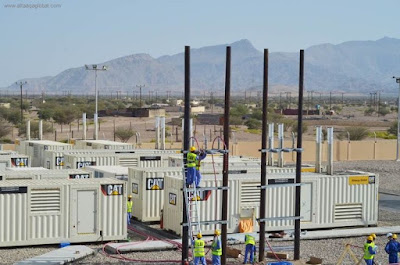

For instance, in the summer of 2013, the Sultanate of Oman hired a 24 megawatt (MW) rental power plant through the leading global temporary power provider Altaaqa Global Caterpillar Rental Power to boost its electricity supply. As the country needed an immediate solution to supplement its existing power supply, Altaaqa Global delivered the project in record-time, completing the installation, powering on and supplying electricity in just 96 hours. Altaaqa Global offered a complete turnkey power solution comprising power generators, transformers, fuel tanks, distribution panels, electrical accessories, and manpower – certified power engineers who will operate, manage and maintain the temporary power plant.

In 2014, Eneo, the integrated power utility provider of Cameroon, opted to partner with Altaaqa Global in installing a 50 MW natural gas power plant in Douala to increase its electricity supply and decrease the instances of power outages and load shedding in the city. Altaaqa Global’s gas power plants, comprising state-of-the-art power generation equipment, started supplying electricity after only 21 days from when the equipment arrived at the site. Till date, the gas power plants have been consistently producing reliable electricity to the residents, businesses, and industries of Douala.


Even as some countries may experience power supply limitation during the summer months, temporary power generation technologies are available to boost their electricity supply so they can prevent power outages and instances of load shedding. Temporary power plants are swiftly delivered, reliable and fuel-efficient, and does not require a huge capital investment. Power utilities can conveniently pay for the rented electricity from their operating expenses over a regular contracted period. Once the need for supplemental electricity passed, rental power plants could be easily demobilized, so no permanent power facility would be left unutilized or would require constant maintenance.

These are just some of the general benefits of choosing to rent power plants in times of short- to medium-term multi-megawatt power requirements. We invite you to talk to us to find out how temporary power plants can help solve your electricity challenges. Call us at +971 4 880 8006 or e-mail us at info@altaaqaglobal.com.


-Ends-


INQUIRIES
Altaaqa Global
Tel: +971 56 1749505

Sunday, August 28, 2016

Déjà vu: A Solution to the Philippines’ Looming Power Supply Crisis

The Philippines has achieved impressive economic growth numbers in recent years and has further reinforced its status as one of the major economies of Asia. Now, the country finds itself amidst a power crisis that may portend a pronounced economic slowdown.

In spite of the slow global economic growth, the Philippines remained a strong economic performer in Southeast Asia. A recent World Bank communiqué substantiates this when it reported that the Philippines’ near-term economic growth was likely to remain strong, and was projected to accelerate to 6.4 percent in 2016, before slightly tempering to 6.2 percent in 2017.


Despite the positive economic outlook, there is a persistent power shortage being experienced in key industrial and commercial areas in the Philippines threatening to fade the lights on this promising growth story. The power supply shortage is most pronounced during peak summer months when hydropower is reduced from the seasonal dry spell, and when a random shutdown of a power plant on the grid can initiate a disastrous widespread power outage. Yes, the Philippines is still grappling with rolling power outages similar to what bedeviled the country in the 1990s.

The Philippines has an enormous energy potential to free itself from the shackles of the power supply conundrum, given its notable geothermal energy capacity, if not for a slew of transmission and distribution limitations, inadequacy in domestic energy production and a challenging geography. Other aggravating factors include the country’s observed dependence on imported fuel, non-subsidy of fuel on the part of the government, high electricity tariffs, and aging existing power infrastructure.


While the Philippines has managed to continually achieve impressive economic growth rates in the face of its power supply challenges, the need for a resolution is growing ever more urgent. The country’s economic expansion, among other factors, has prompted a spike in its requirement for electricity, and now the Philippines’ electric power systems are struggling to keep up. The onus is now on its leadership and on key power industry stakeholders to prevent a power crisis that can negate the economic successes that the country has achieved in recent years.

A turning point

Industry and economic experts opine that the power supply shortage in the Philippines is part of a decades-old chronic insufficiency in the country’s power sector. They point to the country’s mothballing of its sole nuclear plant in 1986 as a vital reason why the Philippines is still struggling to satiate its national electricity demand. Because no new capacity was introduced to the country’s power network, what ensued were sustained day-long power outages that fended off foreign investment, suppressed the growth of various heavy industries and stalled the country’s economy. The incoming government of President Ramos (1992-1998) resolved the power challenge through emergency powers granted by the 1991 Energy Crisis Act to conclude contracts for new power generation. The country was, then, afforded some breathing room.

Now, 18 years on, the Philippines has come full circle and is again confronting a potentially debilitating power crisis.


What is being done?

One of the country’s foremost, albeit stop-gap, response to the power supply shortage is the “Interruptible Load Program”, which entails large establishments, such as shopping malls, office buildings, and factories, to voluntarily switch their power source from the main grid to their proprietary generators when a shortage is impending. It is a program established by the Department of Energy and the Energy Regulatory Commission to help ease the energy supply deficiency in the country until new capacities are introduced to the grid. As of press time, even as details of compensation are yet to be finalized, a number of large firms have already pledged their participation.

There has also been an interest on the part of the government to review, revise and reinforce the Electric Power Industry Reform Act (EPIRA) of 2001, which mandated the privatization of state-owned power enterprises in the hope of encouraging the availability of affordable electricity and fair market competition. The government intends to amend the EPIRA to allow it to intervene in the power sector as need be. For instance, the government proposes to have its own power generation facilities so that it is able to instantly fill in the power shortfalls. Nevertheless, the project still remains to be cost-prohibitive.


The country’s energy department estimates that, with the current economic trajectory, the Philippines’ power demand will balloon to approximately 29,500 MW in 2030. The country’s power generation capacity in the same year, however, is only predicted to be at 26,500 MW – 3,500 MW short of the requirement. Here’s the caveat: In order to bridge the power supply gap, the Philippines reportedly needs USD 46 billion to set up modern power generation facilities in the country. The government is thus taking a proactive stance to woo power investors to invest in the country and help increase its generation capacity.

Not helping this effort, however, is the country’s observed excessive bureaucracy and adherence to official rules and formalities. The energy department itself estimates that it takes approximately 165 signatures and a minimum of three years only to secure the necessary permits for a permanent power plant project. Further delays may ensue in case of an eventual judicial dispute. Other processes like finalizing financial concerns, signing off project designs, sourcing equipment and materials, securing allied service providers, let alone constructing the permanent power plant also take a considerable amount of time. Thus, many foreign power companies have expressed dismay over the situation, saying that the requirements have been a deterrent to entering a market demanding a sizeable initial outlay and a commitment of at least 20 years.


There is no better time

There is no better time for the Philippines to resolve its power challenges than now. The country cannot afford to invalidate its economic achievements of recent years by risking going through a similar power crisis that reined in its economic and industrial growth. If the country wishes to go on living its Cinderella story, the Philippines should do what it can to erase serious concerns about its economic and social sustainability.

While permanent power solutions require a substantial capital outlay, temporary power technologies do not involve capital expenditure. In fact, the government, power utility providers, and other interested industry holders can pay for the rented electricity from their operating incomes. Temporary power solutions may represent a short-term restorative measure, but when employed in crucial times like this, they can be the difference between a calamitous economic collapse and a momentous economic feat.


While the government is revisiting the EPIRA, and while concerned agencies are working to streamline their regulatory processes, the Philippines can readily benefit from the temporary power solutions, which can be swiftly delivered to the Philippines and installed and powered on in as little as days. Contrary to permanent power plants that require long lead times to be completed, rental power plants can immediately supply electricity as soon as the equipment arrives at site owing to its inherent ease of installation and grid connection.

Though recent governments have made great strides in the resolution of the power crisis, there are more to be done to ensure that the Philippines’ power-generation facilities are adequate to cope with the country’s increasing demand for electricity. Until the government and the relevant industry stakeholders encounter an appropriate solution to the persistent power supply challenges, the Filipino will continue to struggle with what has notoriously become a staple of life in the Philippines.

End

PRESS INQUIRIES
Altaaqa Global
Tel: +971 56 1749505

Tuesday, April 26, 2016

The Benefits of Turning to Temporary Power from a Tenant’s Perspective

Owning a home has always been my lifelong goal, but unfortunately, personal and economic circumstances have not yet made that possible. So at present, I am renting a midsize house near my place of work. Through this experience, however, I realized that renting is a real viable alternative to having my own place – especially in a recuperating economy.


Working for a temporary power provider, I reckon that the benefits afforded to me by renting a home, compared to buying my own place, are parallel to the merits of turning to temporary power solutions, instead of building new or maintaining old permanent power plants. So for those who are having a hard time wrapping their heads around the concept of hiring electricity, here are 5 advantages of renting power explained through the perspective of a tenant.

1. Availability
When one chooses to rent, he will not have to wait for when the house is constructed or when the property is handed over, after all the legalities are fulfilled and relevant papers are signed. This can take years! Where will one stay, then? Under a tree? When one rents, he just has to pay the first month’s rent and move in. Simple. The same thing in turning to temporary power solutions. A city, a region or a country does not have to wait till the permanent power facilities are built to have electricity. The utilities can simply hire the services of a temporary power provider, the equipment and the engineering team will arrive at the site, and the power plant can be installed and powered on in a matter of days. Not years, but days.

2. Flexibility
One does not know what the future holds. One can get married and have children, and thus require a bigger home. On the flip side, one can lose his job or, touch wood, one of his loved ones, and decide to downgrade. Power requirements show a similar pattern. There are times, like during summer, when electricity requirement spikes, and there are seasons when it relaxes. With temporary power solutions, power utilities can choose to add or subtract power modules to increase or decrease the output of the power plants. There will be no need to build an additional permanent power facility when the power demand goes up, and there will be no need to run existing permanent power plants at part-load when electricity requirements go down.

3. No need to think of maintenance
Another definitive advantage of renting a home is that tenants do not have to think about maintenance and repair of household equipment and amenities. When you rent a property, the landlord should be responsible for all maintenance and repair jobs. It is the same case in hiring the services of temporary power providers. Part of their service is ensuring that generators run smoothly and efficiently at all times. So, clients can leave the maintenance services to the expert and highly trained engineers at site, and concentrate on activities that matters most to them.

4. Access to modern amenities/technology
Imagine building a state-of-the-art swimming pool and fully equipped gym in your own home. Nice to have, isn’t it? But they represent a colossal expense, and can be prohibitive to most of us. Temporary power solution providers deploy and install cutting-edge power generation technologies that are highly reliable and tremendously fuel efficient. Because such equipment can be rented, clients do not have to spend a fortune on capital expenditure, and can simply pay for the hired equipment and electricity from their operating revenues.

5. Freedom from worries of decreasing values
Property values go up or down. While this may be a huge factor for homeowners, it does not affect tenants. Hired temporary power plants can simply be demobilized when the requirement for supplemental electricity has sailed. This means that there will be no depreciating permanent equipment or facility left behind, which may sit idle and/or may need constant service and maintenance through the years. So those who turn to temporary power solutions do not have to worry about escalating expenses and dwindling values of permanent power facilities.

Bottom Line
Renting or buying is one’s own choice. Both have their advantages and disadvantages. Personally, the trump card of renting is the availability, affordability and flexibility it provides. It may be a different case for you. But, this one is true: before deciding to rent or to buy, look at all the available choices, review the details and make the decision that fits your needs and your pocket.

To know more about how temporary power solutions can work for you, visit www.altaaqaglobal.com

End

PRESS INQUIRIES
Altaaqa Global
Tel: +971 56 1749505
rbagatsing@altaaqaglobal.com

Monday, March 28, 2016

Island Resorts Report Losses Due to Power Outage

Mario, a resort owner, could do nothing but shake his head in disappointment. “I was hoping this week will be profitable for us,” he says, adding that every year, he looks forward to the extended weekend, when vacationers can hardly book a place in his resort. “This year was different. I don’t know. Maybe because the season is extremely warm, and we do not have electricity.”


Like Mario, Jose was disgruntled that power had not been restored in the island in time for the four-day weekend. “This is the last long weekend before the rains set in,” says Jose, “I was hoping to make good money this week as a buffer for the rainy days, but the island utility did not rise to the occasion.”

Mario and Jose, like all the other resort, hotel and restaurant owners in the island, are reeling from the effects of an unprecedented drop in the season’s number of tourists, which was reportedly halved. “They have shun our island, because it will not be comfortable to stay in any resort or hotel here in this condition,” says Mario. “Our resort may have small generator sets, but they are expensive to run, and they are not enough to power all our rooms, especially when air conditioners are turned on.”

Jose brings to light another challenge: “Because there is no electricity, our water stations do not function, so we do not have water in our resort. We have to supply our guests with gallons of bottled water to be used for bathing. This is adding not only to our expenses but also to their inconvenience.”

Mario and Jose’s island lost electricity when power was cut off due to a power plant accident. It has been two weeks since the incident, but power is yet to be restored. “We still hope to make the best out of what’s left of summer,” says Mario, “but in order for our businesses to be profitable again, our island has to have constant and reliable electricity again.”


Keeping islands supplied with reliable electricity comes with several challenges for island utility providers. The wide distance between the mainland and the other islands in the vicinity poses significant difficulties in moving reliable electricity, in case of unforeseen power outages. Island-based businesses can resort to running their own local power generation equipment, like small diesel gensets, or solar or wind energy systems, but their production may not be enough to fully run an entire facility, especially during peak seasons. Then, there are allied island utilities, like water, that also depend on electricity to be delivered.

As a proactive stance against unforeseen electricity challenges, island power utility providers need ready energy sources, which are available on-demand 24 hours a day, 7 days a week, to meet their customers’ energy needs. Island power utilities will find benefit in partnering with multi-megawatt temporary power providers, which can supply reliable electricity anytime and anywhere it is needed.
Temporary power plants can be deployed at a moment’s notice and can be easily installed to start supplying electricity in a few days. The generators that make up the plants are containerized, so they can be easily delivered as complete power packages anywhere in the world, even in remote islands. They are modular, which means they can fit a wide variety of site lay-outs, and do not need to be laid out on a huge space – particularly advantageous for small islands. They also have low-noise and low-emission operations, so situating them within the vicinity of hotels, resorts and tourist spots will not be a problem.


The latest-technology temporary power plants can be easily connected to the existing local power infrastructure in islands, and can generate power either in synchronization with the local power generation plants or as a standalone system. They are flexible in power and voltage, and their electricity output can be scaled up or down to meet islands’ varying electricity demand.
Temporary power solutions will not require a sizable capital expenditure and, owing to their operational reliability and fuel efficiency, will considerably reduce the operating and maintenance expenses of island utility providers.

“We can’t dwell on the lost opportunity of this past long weekend,” says Mario. “But, I hope that our island power utility provider has learned a lesson or two from this incident.”

“This extended blackout has not only affected our businesses,” says Jose. “I hope that this does not stunt our tourism industry.”

End

PRESS INQUIRIES
Altaaqa Global
Tel: +971 56 1749505

Sunday, March 27, 2016

To Rent or Go Permanent: A Mining Perspective

By: Julian Ford, Chief Commercial Officer, Altaaqa Global CAT Rental Power

The mining industry has played an integral part in Africa’s history and progress. Though currently weathering unfavorable economic circumstances, Mining will continue to be important in the progressive growth of the continent’s economy.


Africa is instrumental in providing the world with precious metals and commodities, including platinum, diamond, gold, copper, steel and aluminum. Many of the mines sites in Africa, however, are in remote locations, where power infrastructure may not exist or are still developing, or where a reliable connection to national grids can still be improved. This poses a challenge to mine operations, established and developing alike, particularly in light of the fact that without access to a sufficient or reliable source of electricity, mining companies run the risk of losing on profit, valuable production time or opportunities for growth.

In coming up with a solution to ensure a consistent supply of electricity to the sites, mining companies often find themselves choosing between building a permanent power plant or turning to temporary electricity. Julian Ford, Chief Commercial Officer of global power solutions provider Altaaqa Global, shares his insights on how temporary power solutions can benefit mine operations especially during these economically trying times.

Why rent?

It is most advantageous to specify temporary power during the pre-feasibility/feasibility stage of mining operations, when mining companies are applying for finance. This could help them secure financing for the project.


“Temporary power solutions can support the growth phase of mine operations, because they provide flexibility, scalability, risk mitigation and cost minimization,” says Ford. Specifying the services of temporary power providers during this stage will preclude the need for mining companies to spend scarce CAPEX in procuring their own generators or building permanent power facilities. “With temporary power, mines can opt to start small, then add power capacity as their operations grow. They can pay for the rented electricity from their operational profits,” he says.

As mine operations develop and become established, mining companies will eventually find benefit in building their own permanent power plants, which, however, may take a substantial amount of time to complete. “While the permanent power plants are being constructed,” says Ford, “temporary power can sustain the mine operations. As soon as the permanent facilities are constructed and fully operational, mining companies can simply end the contract, and the temporary power plants will be immediately demobilized. This way, mining companies will not have surplus equipment, because everything was only rented.”


Temporary power solutions are also beneficial for ongoing mine operations, in times of power shortage or emergency situations. “When mine operations need additional power to sustain production, temporary power providers can easily deploy and install temporary power plants at their sites in a matter of days to supply continuous and reliable electricity,” says Ford.

As commodity prices remain depressed, and full economic recovery continues to be elusive for developed and emerging countries alike, mining companies are in the midst of challenging times. “In these times, mining companies cannot afford to subject their operations at risk, owing to lack of funds or long project lead times. Renting power does not require spending scarce CAPEX that is usually related to building permanent power plants. Temporary power plants can also be tailored to any power or voltage, so there is no longer a need to build support power infrastructure to run the rental plants. Additionally, installing temporary power plants will only take days, whereas constructing a permanent power infrastructure may span longer periods of time. This means that in a short time, mine operations can be up and running, and producing.”


“Hiring electricity can prove advantageous for both established and nascent mine operators. It can provide operational flexibility, enhance a site’s productivity and help optimize its processes without the need for a long lead time and a sizeable capital expenditure,” says Ford. “As mining companies realize the benefits of hiring power, it will no longer be uncommon in the coming years to see larger temporary power plants being hired on a longer-term basis within the mining industry.” 

*This article was published in the Web portal of Mining Weekly, South Africa: http://goo.gl/hHUWqa


End

PRESS INQUIRIES
Altaaqa Global
Tel: +971 56 1749505

Tuesday, March 22, 2016

What is Load Shedding?

Chances are, you have already read or heard about load shedding in the past. For those of you living in areas with a stable supply of electricity, load shedding may be an extremely alien concept. But, did you know that many regions in the world still suffer from power demand and supply imbalance, so lights in those places go off at certain times? Here is a simple explanation of what load shedding is, and a suggestion of a possible solution to keep the lights on.


Load shedding happens when people demand more electricity than what the power utilities can produce. A possible solution to provide everyone with electricity is not to provide everyone with electricity at the same time. Power companies may have to cut the electricity supply of certain users at particular times.

Often, power companies do not decide to shed load just like that. As soon as they recognize that the demand is outstripping the supply, they warn people to conserve electricity and limit their consumption. Unfortunately, this strategy often proves ineffective, so power companies are left with no choice but to resort to more drastic measures.


A point of clarification: Load shedding is often called rolling blackouts, but that may be a misnomer, if you want to be lexically strict about it. A blackout is usually an unforeseen power outage, and as such cannot be scheduled. It can also cause severe damage to power infrastructure.

Load shedding, on the other hand is a controlled response to power demand-supply imbalance. Instead of risking a blackout, power providers will decide on the best way to ration electricity, so that the burden of the shortage can be spread across their networks. Load shedding instances are usually scheduled, and establishments that are highly dependent on electricity, like manufacturing plants or supermarkets, are often informed in advance.


Though load shedding is scheduled, and residents and businesses are notified before it is applied, it is still a huge inconvenience and, if not resolved, can prove detrimental to social and economic progress. Load shedding can perfectly avoided by hiring rental power plants to boost the supply of electricity in certain areas. When the supply meets the demand, then the need to shed load will be negated. People and businesses will have a constant and reliable supply of electricity, and their day-to-day activities will no longer have to be adjusted or interrupted.

End

PRESS INQUIRIES
Altaaqa Global
Tel: +971 56 1749505

Sunday, March 20, 2016

Brownouts, Blackouts, Power Surges: What’s the Difference?

We offer hear the words blackout, brownout or power surge when the topic revolves around problems in electricity supply. For some, knowing the exact meaning of the terms is not at all important, because for them, the words only mean one thing: inconvenience. But, it is essential for everyone to have an idea of what they are, so that we know the root cause of the problem and how we can keep ourselves prepared for and safe from their consequences.

Here is an overview of what these terms actually mean…


BROWNOUT
A brownout is a drop in the power supply that leads to a dip in voltage. When a brownout happens, one may notice that lights become dim. Though brownouts are not total power failures, they may damage electrical equipment. Especially vulnerable during brownouts are induction and three-phase electrical motors, because they can overheat. A solution to frequent brownouts is to have a back-up power system that will provide the necessary power in case the voltage drops.


BLACKOUT
A blackout is way more serious than a brownout: It refers to a complete loss of power within a certain geographic area. Blackouts may be caused by several factors, and may take time to resolve, depending on the structure of the affected power network.


POWER SURGE
Power surges are known to be the most detrimental power disturbance, which can permanently damage many types of electric appliances. They occur when something increases the electrical charge at a certain point in the power lines. This sudden “jump” causes a spike in the electrical potential energy, which can increase the current flowing to the wall outlet. Fortunately, surge protectors and circuit breakers can protect you from power surges’ harmful effects. Surge protection should ideally be incorporated into the main power switchboard.


ELECTRICAL TREEING
Electrical treeing is a phenomenon that often manifests in high power installations, including HV power cables and transformers, among others. It is a damaging process owing to partial discharges, which progresses through the stressed dielectric insulation, in a path that looks like branches of a tree. If treeing is not checked, it can cause the continuous deterioration of the equipment, and can eventually result in a total breakdown. To avoid the harmful effects of treeing, it is important to use high-quality materials tailored for the electric load. Regular maintenance by trained engineers is also essential.


Electrical power has become a vital part of modern day life, that even a momentary interruption in power supply can cause significant damages not only to electric devices, but also to business operations and human activity. So, for everything that concerns electricity, you should always seek for professional services, and trust nothing but high-quality equipment and installation. The initial cost may be higher, but you must remember that you are not only paying for mere products and services – you are investing in the continuity of your business, in your personal protection and in total peace of mind.    

End

PRESS INQUIRIES
Altaaqa Global
Tel: +971 56 1749505

Sunday, March 13, 2016

The 10 Biggest Power Outages Ever Recorded

Power outages can cause severe economic and social distress. A prolonged disruption of electric power, particularly on a larger municipal, district or regional scale, can have immense adverse effects on health, safety, and commerce & industry, so power utilities should be prepared to respond to cases of wide-spread power interruption.

We have trawled the Web to trace the 10 biggest power outages recorded in history. Here is what we found out…


1. July 2012, India

In what could be the biggest power outage in the world, the blackout in India in July 2012 left an estimated 620 million people without electricity. The outage was ascribed to the tripping of a circuit breaker, owing to a spike in electricity consumption during one of the hottest seasons ever recorded.

2. January 2001, India

In January 2001, almost 230 million people lost power due to a fault in the transmission system in one state, which caused a cascading failure throughout the other states in India’s northern region.

3. November 2014, Bangladesh

A failure of a power transmission line from India to Bangladesh caused a power outage that left more than 150 million people without electricity.


4. January 2015, Pakistan

Eighty per cent of the country, or 140 million people, was left without electricity after an explosion at a power plant caused a backward surge of electricity to the facility. This caused the tripping of power lines, leading to a cascading effect throughout the country’s grid.

5. August 2015, Indonesia

Caused by a major transmission line failure, and the consequent disengaging of several power plants, the power outage of August 2015 in the Indonesian islands of Bali and Java left more than 100 million people without electricity.

6. March 1999, Brazil

Ascribed to a lightning strike that caused cascading failure throughout Southern Brazil’s power infrastructure, the largest power outage in the history of Brazil left 97 million people without electricity.


7. November 2009, Brazil and Paraguay

When transmission lines from the power station at Itaipu were tripped by a major thunderstorm, 87 million people from Brazil’s most populous states and the entire country of Paraguay were left without electricity.

8. August 2003, US and Canada

Known as one of the “Northeast Blackouts” of the past century, the power outage of 2003 affected 55 million people. The outage was blamed to a technical error that caused the control room alarm system to fail to alert controllers about overloaded transmission lines, leading to widespread grid distress.

9. September 2003, Italy

With the exception of the island of Sardinia, the entire country of Italy lost electricity, leaving 55 million people in the dark. The investigation revealed that the outage was caused by a system overload following a storm damage to a power line coming in from Switzerland. This consequently tripped power lines running in from France.


10. March 1978, Thailand

A generator failure in a single power plant caused a nationwide grid shutdown for an entire day, causing inconvenience to more than 40 million people.


Multi-megawatt rental power plants are the ideal solution to stabilize the grid and support power networks. They are immediately available, can be deployed at a moment’s notice to anywhere in the world. They can be easily installed and are capable of continuously supplying reliable electricity in a matter of days. Temporary power plants can be easily connected to existing power infrastructure, and can generate electricity in sync with the local power generation plants or as a standalone system. They are flexible in power and voltage, and their output can be scaled up or down to meet varying electricity demands.

In hiring rental power plants, utility companies need not worry about capital expenditure; in fact, they will have significant savings in the operation and maintenance of the temporary power plants, owing to their reliability and fuel efficiency.


The effects of power outages to people, businesses, industries and social services can be devastating. Without electricity many of the most important needs of the modern society will go unmet. Because electricity plays such a vital role in our daily lives, its reliable and continuous supply is of utmost importance.

End

PRESS INQUIRIES
Altaaqa Global
Tel: +971 56 1749505

Tuesday, February 16, 2016

Renting power: Keeping mines thriving through volatility

The mining industry is currently in the doldrums. As commodity prices remain stubbornly depressed, and economic recovery remains elusive for developed and emerging countries alike, mining companies are in the midst of challenging times.


Along with stagnant commodity prices, weak demand for products, low levels of economic growth in established markets, increasing stockholder pressures and employment and social issues, power supply deficit is also one of the mining industry’s most pressing hurdles. Many mine operators around the world have been facing numerous production-related challenges, owing to electricity shortages, not helped by the ongoing El Nino weather phenomenon. Mining companies in Africa, for instance, particularly those located in hydropower-dependent areas, have been experiencing consistent output drops as hydroelectric power facilities fail to generate enough electricity to sustain large-scale mine operations. As a result, mining companies in Africa, established and nascent alike, are at present struggling to maintain profitable production, resulting in job cuts, tighter cash flows and limited capital expenditures.

Hiring the services of a temporary power provider can be an immediate solution to the industry’s electricity-related challenges. A continuous supply of reliable electricity is indispensable in mine operations, be it for exploration, production, climate control or site visibility, and rental power plants can instantly provide the necessary electricity as and when it is needed. Temporary power plants are readily available and are rapidly deployed anywhere in the world where electricity is urgently required. Rental power plants can be tailored to any power or voltage, and the capacity can be increased or decreased according to demand, so mine operators will be able to add additional power modules that will increase the rental power plant’s generation capacity as their operations expand and their power requirements increase.


By opting to rent power, mining companies do not need to spend scarce resources on capital purchase, which is usually required when building permanent power stations. They can also pay for the electricity produced by the hired power plants from their operating revenues. The investment that mine operators will make in hiring electricity has proven to be marginal compared to the cost of foregone business opportunities, lost production time or wasted man-hours. This factor can be very significant at the feasibility stage, when mining companies are applying for finance.

Temporary power plants are containerized, so that they can be delivered to and installed in any mining site anywhere in the world, and be operational in a matter of weeks. They are fully able to function even in remote locations and in sites where traditional power infrastructure, like grids and substations, is outdated, damaged or absent. They can be installed and powered on in a matter of days, so power can be immediately supplied or restored.

Rental power plants are fuel efficient, and can run on diesel, natural gas, or on a combination of the two. Modern natural gas generators are also capable of converting coal mine methane to electric or thermal power, which contributes to the reduction of greenhouse gas emissions.


The mining industry, not only in Africa but also in other parts of the world, is going through tough times prompted by natural and economic circumstances. Hiring electricity can give mine operators a sustainable competitive advantage. It can provide operational flexibility, enhance a site’s productivity and help optimize its processes without the need for a long lead time and a sizeable capital expenditure. Instead of acting in exasperation and fear of the future, and getting lost in a web of operational minutiae, mining companies should draw ideas from allied industries, and give premium to innovation and imaginative solutions.

End

PRESS INQUIRIES
Altaaqa Global
Tel: +971 56 1749505

Saturday, January 9, 2016

The Story of SALt: Sustainable Alternative Lighting

Up to this day, there is still a considerable number of people living in the Philippines that do not have access to reliable electricity. Being an archipelago, the Philippines is made up of more than 7,000 islands, most of which are home to people still using candles, kerosene lamps and expensive battery powered lanterns as their primary source of lighting.


In the hope of alleviating the situation of their countrymen, a group of Filipinos, led by Engr Aisa Mijeno, invented a lamp that runs on just one glass of water and two tablespoons of salt. The inventors say that the lamp, aptly called SALt, can work for up to eight hours, and has a lifespan of approximately six months. When used for less hours, the lamp can last up to more than a year.

SALt can also run on ocean water, which will be particularly beneficial to people living along the coastline.   


The inventors explain that there are no materials or components inside the lamp that may cause fire accidents – in contrast with kerosene lamps and candles that are hazardous and risky to health. “SALt,” explained the inventors, “uses the science behind the Galvanic cell, which is the basis for battery-making. It changes the electrolytes to a non-toxic, saline solution, making the entire process safe and harmless.”

As an added feature, the lamp doubles up as an emergency charger for mobile phones. With the Philippines being the 3rd most disaster prone area in the world, it is highly essential for its residents to have a steady supply of food, drinking water, sustainable lighting and a stable means of communication during times of calamities. 


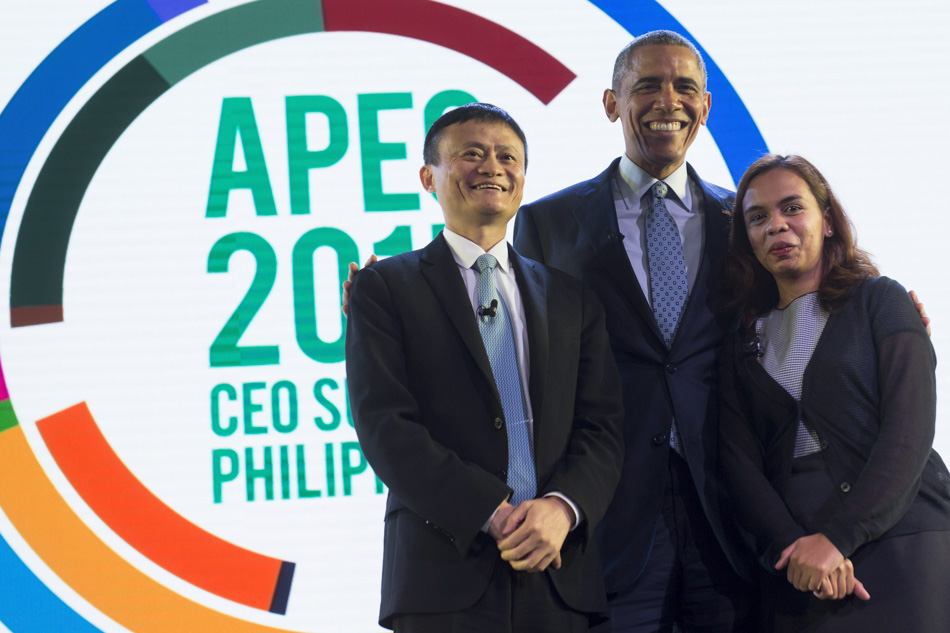
Interacting with US President Barack Obama and Alibaba Founder Jack Ma

From the ripples that SALt had been organically creating in the islands of the Philippines, it created a huge wave in an international convention of world leaders.

During the recently concluded APEC Summit in the Philippines, Engr Mijeno had the privilege of sitting in the same plenary session as US President Obama and Chinese billionaire, Alibaba founder Jack Ma. Mijeno said that it was the White House who invited her to join the session, spurred by its interest to know more about SALt. "We received a call from the White House," said Engr Mijeno, "which at first we thought was a prank call." She said she was invited to the session to represent female entrepreneurs and to talk to President Obama about start-up ventures in the Philippines that the US government could support.  


During the dialogue with Obama, Mijeno took the chance to solicit support from the US President. The SALt inventor also revealed that Jack Ma also offered assistance, not divulging any details.

For more information on the lamp, visit: http://www.salt.ph

End

PRESS INQUIRIES
Altaaqa Global
Tel: +971 56 1749505

Tuesday, November 17, 2015

Load Shedding ‘Forces’ Pregnant Patients to Leave

Modern hospitals require a continuous supply of reliable electricity to best cater to the needs of their patients. Hospital equipment, like respirators, health monitors, ultrasound scanners, and laboratory machines, necessitates electricity to function as effectively and efficiently as desired. Intensive care units, gynaecology sections, operating theatres, recovery rooms, neo-natal sections, and offices & clinics need power to keep patients stable and comfortable, and doctors and medical staff productive. Even a momentary power outage can have serious effects on the health of the patients and the operations of the hospital at large.


A city in one of the emerging countries in Asia has been suffering from a power supply shortage that has placed its healthcare facilities, especially the ones operated by the local government, in dire straits. Owing to the lack of electricity, and the consequent constant load shedding and blackouts, gynaecology departments in certain public hospitals have been forced to refuse new pregnant patients and discharge existing ones, advising them to instead seek medical help from private hospitals which may have electricity to support their specialized medical needs. Sunil, whose pregnant wife was admitted in one of the public hospitals, rued, “We came to this government hospital to avail of affordable medical care, but there has been no electricity the entire day.” He added that due to the absence of appropriate care and the discomfort brought about by heat and humidity, his wife’s condition had fast deteriorated. “Now,” he said, “because there is uncertainty when the power will be restored, we don’t have any choice but to transfer to a private hospital and hope that they have local generators that function. We will surely pay a higher price, but that’s another challenge altogether.”

Commenting on the situation, the Chief Medical Officer of the said hospital, explained, “We have a local generator for emergency. Unfortunately, it is not functional as of the moment as there were some technical glitches. We will have it fixed and try our best to have the power supply restored.” When asked when power can be restored, he vaguely said, “When the generator is fixed, then the power will be restored.”


In times of power supply insufficiency, load shedding and regular electricity outage, governments, utilities and stakeholders in the healthcare sector will find an immediate effective power solution in hiring the services of temporary electricity providers. Reliable electricity is needed to power hospitals and healthcare facilities, and renting large-scale power plants can guarantee a constant supply of power even to expansive facilities without the need to spend scarce CAPEX. Rented power plants offer economy and flexibility, because governments, utilities and allied stakeholders can pay for the electricity produced by hired power plants as the generators run, and they can choose to add power modules to the rental power plants as their requirements increase.

Rental power plants are not only reliable and fuel efficient, they also have less impact to the environment. Modern rental generators boast of cleaner operations, being able to run on a variety of fuels, including natural gas or a blend of gas and diesel. Studies conducted in different rental power plants sites around the world show that temporary power stations, like those running on natural gas, can surpass the worldwide NOx emission requirements, emitting only 250 mg/Nm3 even without after treatment.

Electricity powers hospitals and healthcare facilities so that they offer the full extent of medical services required by patients. A power interruption, regardless of its duration, can negatively impact the health of patients and the operations and facilities of hospitals. While waiting for the completion of permanent solutions to electricity supply problems, renting large-scale power plants can bridge the gap in power anytime and anywhere in the world.

End

PRESS INQUIRIES
Altaaqa Global
Tel: +971 56 1749505
rbagatsing@altaaqaglobal.com

Monday, November 9, 2015

Will Blackouts Dim the Future of the Next Generation?

Worsening electricity shortages across many of the world’s developing countries are choking off progress in the education sector


Ayana, an engineering student from a town in Africa, would like to be a power plant engineer, having been through the horrors of persistent blackouts and load shedding. 

“I’d like to be an electrical engineer, because I would love to solve the power supply problems of my town, or maybe my country,” she said. She entered the technical university with high hopes: Months before classes started, her school had been outfitted with new computers, engineering laboratory equipment and electrical machines, and had been connected to the grid with the help of a rural electrification agency. “Our classes were productive, because we were working on our computers, spending fruitful hours in the lab and actually performing experiments,” she said, recounting her experiences prior to the prolonged rain-less season that has shrouded her country.

“Now,” she continued, “we are fast growing frustrated with what we are doing in school.” Owing to the lack of electricity due to shortage in hydropower, Ayana’s class regularly skips experiments, causing her and her classmates’ marks to flop. “We are like learning from our imagination. How could we master practical and technical subjects on paper? But, what can we do? Our machines and lab equipment just won’t work without power.”

Imamu has just earned his degree in Education from an African university. He wanted to teach young children, so he can take part in the formation of their values and learning. But, regularly disrupted classes and the lack of power and water in schools have gradually caused a change of heart. 

“I would have loved to teach children here in my country, but I feel like I am between a rock and a hard place”, he said, adding that the pressing electricity problems were driving him away. “Because power only returns in the evening, I have to begin my classes at night. But, it’s not possible. It is not safe, and I have to be with my family.” He said that if the dire power situation continues, he might eventually be left with no choice but to move to neighboring countries where wages for teachers and working conditions in schools are better.

Electricity has gradually become a scarce commodity in many emerging countries, largely owing to shortage in hydropower and unstable power infrastructure. With the effects of blackouts and load shedding growing more pronounced in the education sector, industry experts and stakeholders fear for the next generation.

“Schools are hit hard by this ongoing energy supply situation,” said a member of an Educators Union. “Many developing countries are burdened with unemployment, and for some, the key to have better chances of finding a suitable job is obtain qualifications in science, engineering and business. But, while quality science, engineering and business education received a notable boost some few years ago, these days, it may have hit a formidable roadblock in blackouts.”

Solving the educational conundrum cannot wait for years nor decades. To keep up with the rapid evolution of knowledge and of the world itself, students and educators alike have to be abreast of the developments with the help of computers, mobile devices and other modern electronic equipment.

In times of persistent load shedding and regular blackouts, governments, utilities and stakeholders in the education sector will find an immediate power solution in hiring the services of temporary electricity providers. Reliable electricity is needed to power computers, run science and engineering laboratories and keep the school environment conducive to learning. Renting large-scale power plants can guarantee a constant supply of power to educational facilities without the need to spend scarce CAPEX in building permanent power stations. Governments, utilities and other stakeholders will appreciate the fact that they can pay for the electricity produced by hired power plants as the generators run, and that they can choose to add power modules to the rental power plants as their requirements increase.

Rental power plants are not only reliable, they also have less impact to the environment. Modern rental generators boast of cleaner operations, being able to run on a variety of fuels, including natural gas or a blend of gas and diesel. Studies conducted in different rental power plants sites around the world show that temporary power stations, like those running on natural gas, can surpass the worldwide NOx emission requirements, emitting only 250 mg/Nm3 even without after treatment.

“I feel sad even considering moving to another country to teach other children,” said Imamu. “I feel that as a citizen of my country, I have a role to play in its progress and in the development of its children and people. I still want to stay here. I hope the situation will be better in the coming weeks…”

“I am excited to actually use the computers and the lab equipment we have in school,” said Ayana. “I still believe that when I finish school, I will be a productive electrical engineer. I don’t only dream for my personal success; I envision my town emerging from poverty with reliable electricity.”

End

PRESS INQUIRIES
Altaaqa Global
Tel: +971 56 1749505

Thursday, October 1, 2015

Can We Capture and Utilize the Electrons Produced Through Photosynthesis?

We were taught about photosynthesis in school – a process through which plants convert sunlight into food. Approximately all of the photons captured by plants from sunlight are turned into electrons, which then go through further processes to generate sugars.

But, did you know that photosynthesis can be interrupted to capture and utilize the electrons produced through it? A study conducted by the University of Georgia is focused on harnessing the power of these electrons to generate electricity.


How is it possible? 

The key is in extracting certain parts of plants that lead to thylakoids, the photosynthetic reaction, and then immobilize them on a bed of carbon nanotubes that will play the role of effective electrical conductors to capture and send the electrons on, along the wire. Then, with a consistent light flow, there will also be a continuous flow of electrons that can be converted to electrical power.

The roadmap ahead

The scholars agree that there is still a lot to cover and more complicated processes to be handled in relation to taking the thylakoids out of a plant. They believe that this machinery would eventually have to be genetically engineered to maintain stability throughout the process and completely harness the potential of the system.

Once the system is stably in place, the researchers believe that the applications for this technology are endless. This entirely clean energy source will be capable of acting as a true source of electricity for various machinery and for remote locations.

While the technology is still being enhanced and optimized, existing alternative sources of electricity, like rental power plants, can fill in the gap in power supply, where and when needed. Temporary power plants, which do not call for a huge CAPEX, can be easily deployed and installed at almost any conceivable location or site on Earth. They can be tailored to precisely respond to the power needs of any operation, and can be ramped up or scaled down depending on the requirement. They do not require extensive civil work to begin operating, and can function even without substations. Moreover, modern rental power stations are environmentally friendly, at times even doing better than the global emission benchmark.

End

PRESS INQUIRIES
Altaaqa Global
Tel: +971 56 1749505

Tuesday, September 8, 2015

Temporary Power: Keeping the Mining Industry Buoyant Through the Trying Times

The present times have not been favorable to the mining industry.

Many mine operators in Africa, Asia and South America have been facing myriad production-related challenges, owing to power shortages, not helped by the longer and stronger than expected El Niño phenomenon. El Niño, a cyclical meteorological phenomenon, brings extreme weather to parts of South America, Southeast Asia, Australia and Africa. For instance, mining operators in Indonesia, a major nickel and copper producer, have been facing consistent output drops as hydroelectric power facilities fail to generate enough electricity. In Peru and Chile, persistent heavy rains not only cause extreme flooding into zinc mines, affecting their production and triggering price spikes, but wide spread blackouts and damage to power infrastructure.


Then, there is the gradual decline of prices of commodities for the past several years. Prices of gold, silver, iron ore, coal and copper have all been negatively affected by stringent credit restrictions, weak global demand and a growing supply from new low-cost projects. As a result, mining companies, established and start-ups alike, are struggling to maintain a profitable production, resulting in job cuts and tighter cash flows and limited expenditures.

In such a case, mine operators can find huge benefits in hiring the services of temporary power providers. Electricity plays an undeniably essential role in mining operations, be it in exploration, production, climate control or workplace visibility, and rental power plants can provide the necessary electricity without the operators spending scarce CAPEX. As opposed to investing in permanent power infrastructure, mining companies can pay for the electricity produced by hired power plants from their operating revenues. As their operations expand and their power requirements increase, mine operators will be able to add additional power modules that will increase the rental power plant’s generation capacity. The investment in temporary power plants have been proven to be marginal compared to the cost of foregone opportunities, lost production time, or wasted man-hours.


As rental generators are modular and containerized, they can be rapidly delivered to and installed anywhere in the world, and can be tailored to the requirement of any mining site. They are fully able to function even in remote locations and in sites where traditional power infrastructure, like grids and substations, is outdated, damaged or absent. They can be fully constructed and powered on in a matter of days, and can be ramped up or scaled down depending on a site’s power usage demand.

Modern rental generators boast of a cleaner operation, being able to run on a variety of fuels, including natural gas or dual-fuel (70% gas and 30% diesel). As a case in point, Caterpillar’s natural gas-powered generators surpass the NOx emission requirements, emitting only 250 mg/Nm3 even without after-treatment.

Caterpillar’s gas generators are also capable of converting coal mine methane to electric or thermal power, which contributes to the reduction of greenhouse gas emissions. The gas generator technologies have the ability to utilize gas with variable concentrations of methane.

The global mining industry is going through challenging times triggered by natural and economic circumstances. Temporary power technologies can give mine operators a sustainable competitive advantage, as they can enhance a site’s productivity and optimize its processes without the need for a sizeable capital expenditure.

End

PRESS INQUIRIES
Altaaqa Global
Tel: +971 56 1749505