Showing posts with label load shedding. Show all posts

Sunday, May 7, 2017

How to Prevent Electricity Disruption during Peak Summer Months

In many countries around the world, power shortages, blackouts, load shedding and unscheduled electricity interruption are common during peak summer months. There are several reasons why they occur, but perhaps two of the most prominent are the spike in power consumption among residents and businesses, and not having enough power supply.


During the hottest days of the year, it is not uncommon that residents, businesses, and industrial operations use air conditioning more often. In homes and offices, multiple air conditioning units usually run all at the same time at full power to cool the temperature and keep a healthy living or working environment. In addition, in many countries schools are on break during these months so children are likely staying at home and consuming electricity as they watch TV, play with their game consoles or surf the Web on their computers. These are just a few of the reasons why power consumption notably increases during summer months.

On the other hand, in some countries, especially those that rely on hydropower, the summer months also see a reduced availability of electricity supply due to drought, prolonged absence of rain and the drying up of water reservoirs. When electricity consumption went up while the supply gradually decreased, one could imagine that what would follow are more frequent power interruption, longer blackouts, and unplanned load shedding. This would, in turn, result in massive inconvenience among residents, hampered business operations and lower levels of industrial production.

Good thing interim power supply solutions are available. Many power utilities prevent the occurrence of widespread blackouts and power disruption during the peak summer months by hiring multi-megawatt temporary power plants.
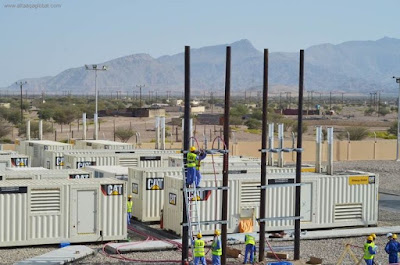

For instance, in the summer of 2013, the Sultanate of Oman hired a 24 megawatt (MW) rental power plant through the leading global temporary power provider Altaaqa Global Caterpillar Rental Power to boost its electricity supply. As the country needed an immediate solution to supplement its existing power supply, Altaaqa Global delivered the project in record-time, completing the installation, powering on and supplying electricity in just 96 hours. Altaaqa Global offered a complete turnkey power solution comprising power generators, transformers, fuel tanks, distribution panels, electrical accessories, and manpower – certified power engineers who will operate, manage and maintain the temporary power plant.

In 2014, Eneo, the integrated power utility provider of Cameroon, opted to partner with Altaaqa Global in installing a 50 MW natural gas power plant in Douala to increase its electricity supply and decrease the instances of power outages and load shedding in the city. Altaaqa Global’s gas power plants, comprising state-of-the-art power generation equipment, started supplying electricity after only 21 days from when the equipment arrived at the site. Till date, the gas power plants have been consistently producing reliable electricity to the residents, businesses, and industries of Douala.


Even as some countries may experience power supply limitation during the summer months, temporary power generation technologies are available to boost their electricity supply so they can prevent power outages and instances of load shedding. Temporary power plants are swiftly delivered, reliable and fuel-efficient, and does not require a huge capital investment. Power utilities can conveniently pay for the rented electricity from their operating expenses over a regular contracted period. Once the need for supplemental electricity passed, rental power plants could be easily demobilized, so no permanent power facility would be left unutilized or would require constant maintenance.

These are just some of the general benefits of choosing to rent power plants in times of short- to medium-term multi-megawatt power requirements. We invite you to talk to us to find out how temporary power plants can help solve your electricity challenges. Call us at +971 4 880 8006 or e-mail us at info@altaaqaglobal.com.


-Ends-


INQUIRIES
Altaaqa Global
Tel: +971 56 1749505

Wednesday, March 22, 2017

How to Keep Engineers in Manufacturing Companies Engaged at Work

When engineers find their work environment motivating, they will continue to perform at their peak, and even surpass expectations

The role of engineers in manufacturing companies can never be understated. A manufacturing operation may involve engineers specializing in various fields, including product development, design & operation and electrical to name a few.


Product development engineers make ideas come to life. In companies like Apple, Samsung, or Microsoft, they are involved in turning concepts into actual products that consumers patronize and use.

Design and operation engineers design, develop and manage integrated systems for the production of high-quality products. These systems may include computer networks, robots, machine tools, and materials-handling equipment.

Electrical engineers make sure that the power supply in a manufacturing site is enough for the company to meet its production targets. This is of particular importance for industrial manufacturing businesses like ArcelorMittal, ThyssenKrupp, Boeing or Airbus. They maintain the power infrastructure and facilities within the manufacturing plant, or liaise with temporary electric power suppliers in times when the factory needs additional power, say during peak production seasons, or when load shedding or peak shaving are implemented in the area.

Whatever the area of specialization is, engineers play highly essential roles in manufacturing facilities, and as such, it is important to keep them motivated at work and retain their services. While there is not a world of difference between what keeps engineers engaged at work and what it takes to do that for any other member of the organization, paying keen attention to the unique motivational needs of engineers can spell a huge difference.

Here are some things to take into consideration in keeping engineers motivated in manufacturing companies:

1. Allow them to be free, creative

Engineers value a strong sense of autonomy and the freedom to choose how to approach various issues at work. They appreciate if they are given the opportunity to creatively resolve engineering-related challenges at work. Based on our experience with our electrical engineers, they thrive on a results-driven environment, and appreciate having a degree of independence to perform at their best with minimal supervision and instruction. They are also stimulated by a work environment that promotes and rewards innovative thought.  

Courtesy www.gineersnow.com

2. They are not enticed by promotion

Okay, hold your horses. When I said that engineers are not enticed by promotion, I meant the type that follows a conventional progression across the company organization.

Courtesy www.gineersnow.com
Many engineers in manufacturing companies, like in India’s Tata Motors or Tejas Networks, may not be interested in traditional leadership positions, because they may not want to manage other employees or sit in the office for hours on end – they just want to keep building and developing products, and maintain the challenge and dynamism of a thriving engineering career. It is possible that promoting them to a traditional manager will suppress their creative engineering process, and this may dampen their motivation at work. For example, if a manufacturing company promotes an electrical engineer (who is actively engaged in installing, running and maintaining onsite power generation facilities) to a conventional manager (who will spend eight hours of his day preparing documents and responding to e-mails), then it is the running the risk of demotivating the previously-engaged engineer.

Having said this, if an engineer really deserves a promotion, then let it be to a position that is equally energetic and stimulating, that will still require his engineering creativity and ingenuity.

3. For engineers, learning is an ending journey (Kaizen)

Manufacturing companies hire engineers because of the latter’s mastery of what they do. While they may already be specialists in their own fields, engineers are always hungry to learn more and do more.

Courtesy www.gineersnow.com
Engineers flourish in environments where learning is a part of their daily life. As such, manufacturing companies should continuously offer them opportunities to improve on their skills and to apply new learnings through healthy challenges. Based on experience, our electrical engineers welcome specialized training courses on modern technologies and innovative methods, and situations that will require them to use the new knowledge that they have acquired. They also appreciate opportunities to mentor technicians or other engineers, because doing so helps them reinforce their engineering knowledge and, to a large extent, gives a deeper sense of purpose to their vocation as engineers.

4. Give them missions, not just projects

Engineers are driven by their desire to change the world. Most great engineers are motivated by working on big projects and by seeing the encompassing results of their hard work. Therefore, it is important that engineers in a manufacturing company realize the magnitude of the task given to them.

For example, it is essential that an electrical engineer in an industrial manufacturing facility, like Emirates Global Aluminium or Tata Steel, understands that without him performing his task, the plant will not have the power to produce goods, and as such the company will fail at providing its customers that products that they need. This will help him see the real-world impact of his responsibility within the production plant. The consciousness that his task has a meaningful effect to a great number of people and businesses will lead him to embrace his accountability and to value more his position within the company.

Courtesy www.gineersnow.com

5. Let them have fun

Engineering tasks within a manufacturing company can be daunting and can put a huge amount of pressure on engineers. It will not hurt to inject a bit of fun.

Courtesy www.gineersnow.com
It is, thus, important for manufacturing companies to encourage enjoyment and interaction at work. For example, they can organize a quarterly family day, when employees and their families can gather and enjoy a day at the park. They can also arrange a company lunch or dinner after a successful campaign or production season as a sign of appreciation of the employees’ work. They can also host an awards ceremony to recognize exemplary performance. A sports day is also a good idea to allow employees to unwind and engage each other in healthy competition.

Engineers represent an invaluable part of the overall success of a manufacturing business. Engineers possess an intellectual capacity and ability to generate innovation, and this is essential for manufacturing companies especially amidst escalating competition within an increasingly challenging market. The more that the management understands what drives the motivation of engineers, the better experience the engineering team will have in the manufacturing company. And the more encouraging their work environment, the bigger the chance that engineers will remain engaged at work, perform at their peak and surpass expectations.

For more information on the values that guide our operations and business & human resource practices, please visit: http://www.altaaqaglobal.com/about-us/about-altaaqa-global


-Ends-


This article has previously been published on https://www.gineersnow.com/leadership/keep-engineers-manufacturing-companies-engaged-work


PRESS INQUIRIES
Altaaqa Global
Tel: +971 56 1749505
rbagatsing@altaaqaglobal.com

Tuesday, March 21, 2017

Divide and Conquer: How Decentralized Power Generation Can Alleviate Sub-Saharan Africa’s Electricity Challenges

Decentralized power facilities, sources that generate electricity much closer to the consumers, are touted to be vital in improving Sub-Saharan Africa’s power supply situation. We take a close look at their benefits.

It has been highlighted, time and again, that Sub-Saharan Africa is home to close to a billion people without access to reliable electricity. The region’s electricity challenges may be attributed to several factors, most notably to insufficient connectivity particularly in rural areas, and intermittent power supply.


A recent study by Afrobarometer, a pan-African research network, illustrates that only 45% of rural areas enjoys access to the electric grid across 36 African countries considered. In fact, countries like Burundi, Burkina Faso, Sierra Leone, Niger, Guinea, Liberia and Mali have extended the electricity grid to only a third or less of their territories. The inadequate grid extension and connectivity is stark in the West and East African countries, and in a number of Southern African countries, including Zimbabwe, Namibia, Zambia, Mozambique and Malawi.

But, even as various areas in Sub-Saharan Africa are connected to national power network, they are still not guaranteed to receive a constant reliable supply of electricity. For instance, 14% of grid-connected consumers in South Africa, 44% in Zimbabwe, 33% in Zambia, 23% in Botswana, 19% in Namibia and 15% in Kenya, say they still suffer from regular power outages and load shedding. This can be largely attributed to inadequate power generation, high transmission losses, and limitations in power distribution.

A case for Decentralized Power

Decentralized power generation systems can help countries in Sub-Saharan Africa alleviate their present power generation and transmission challenges. Several technologies can be implemented as a decentralized power generation system, including solar, wind, hydro, and temporary power plants running on diesel or gas.

Courtesy www.gineersnow.com
Decentralized power generation systems will prove beneficial on several levels to Sub-Saharan African countries. Below are some of the highlight advantages of decentralized power generation technologies:

Flexibility

Decentralized power generation systems, like rental power plants, can be easily mobilized, installed and operated anywhere in the world, even in the remote areas of Sub-Saharan Africa. They can even be installed in areas without sub-stations, and can be directly connected to the grid regardless of its quality or age.


They can be completed and powered on in a matter of days, and can be rapidly demobilized once the area of service is already connected to the permanent centralized power plant. They do not require a huge upfront investment, and as such, do not have long payback periods. Instead, governments or power utility providers can pay for the rented electricity in regular intervals over a contracted term.

An example is Altaaqa Global’s natural gas temporary power plants in Douala, Cameroon, which were installed and powered on in as little as 21 days from the time the equipment arrived at the intended sites. The power plants, because they comprised modular and containerized power equipment, were easily delivered from the point of origin in the Middle East, to the port in Douala, to the power plant sites, and were successfully installed despite space limitation.


The power plants have been consistently producing a combined 50 MW since they were turned on, easing the pressure on the main grid and reducing electricity demand at peak times. They have been instrumental in lessening the power supply deficiency and reducing the instances of load shedding in Douala.

Scalability

Temporary power plants, as a decentralized power generation system, are highly scalable in that their output can be increased or decreased depending on the prevailing requirement. The power provider can simply add or subtract generators to or from the power plants to customize their output. The result is that the rental power plants generate the exact amount of electricity as demanded, so the power plants do not inefficiently run on part-load, and that the governments or the power utility providers do not pay for unutilized capacity.


Diversity

As above, there are several technologies that can be implemented as decentralized power generations systems. The good news is these technologies may complement each other to ensure their efficiency and reliability. For example, temporary diesel or gas power plants can support solar or wind energy sources at times when sunshine or wind is insufficient to produce the desired amount of electricity. Rental power plants can also take up the electricity load during low-rain or dry seasons, when the hydropower systems have limitations in producing electricity.


Efficiency and Reliability

The US Energy Information Administration reports that up to 7% of the electricity generated by central power plants is lost in transmission and distribution. Turning to decentralized power generation technologies, like temporary power plants, can reduce the transmission and distribution losses because they are installed nearer to the consumers.

Moreover, rental power plants are regularly serviced and maintained by trained and qualified service engineers and technicians, and monitored and evaluated by competent certification bodies so their optimal energy performance and reliability is guaranteed.


For instance, Altaaqa Global’s 50 MW natural gas power plants in Cameroon have recently been awarded an ISO 50001:2011 certification for energy performance, making Altaaqa Global the first and only rental power company to have received the recognition. The plaudit was a testament to the power plants’ energy efficiency, cost-effectiveness and environmental stewardship.

In addition to the above, decentralized power generation technologies can support various environmental initiatives in vigor in several Sub-Saharan African countries due to their environmental conscious operations. As a case-in point, temporary power plants running on natural gas comply with worldwide emission standards, while solar or wind power sources are completely renewable and contribute in conserving natural energy resources.

For example, Altaaqa Global’s natural gas temporary power plants in Cameroon was handpicked by Eneo to support its existing power facilities, owing to their reliability, energy efficiency and environmental consciousness, which perfectly fits Cameroon’s sustainable energy initiatives.


Electricity and Africa’s Development Agenda

As an emerging region, Sub-Saharan Africa needs electricity to support its economic priorities and other development areas. At present, even as the economic focus of governments in Sub-Saharan Africa are in areas directly related to basic issues of livelihood (employment, healthcare, water supply and agriculture), they are gradually working on various initiatives to ensure the region’s energy future. While their long-terms plans are coming to fruition, decentralized electricity technologies, like rental power plants, can supplement existing centralized power facilities to provide the electricity when and where needed.


-Ends-


PRESS INQUIRIES
Altaaqa Global
Tel: +971 56 1749505
rbagatsing@altaaqaglobal.com

Tuesday, January 17, 2017

Why Do Mines Consume Enormous Amounts of Electricity?

Mines require copious amounts of electricity to support various functions. In fact, owing to the huge amount of work and processing that go into production, mining is one of the most energy-intensive industries in the world, accounting for approximately 5% of the global electricity consumption.

To further illustrate, in Chile, considered as the world’s largest copper producer, mining is responsible for more than 20% of the country’s total power consumption. In Zambia, mining accounts for a whopping 50% of the country’s power utilization.


Obviously, no mine can operate without electricity. And without mining, the world will see no houses, skyscrapers, vehicles, airplanes, mobile phones, laptops, computers and a gazillion other things. But, have you ever wondered just how much electricity is required to power a mine throughout its lifetime?

Let’s have a quick look at some of the energy-intensive work that takes place in a mine. There is blasting open the earth, crushing and grounding millions of tons of ore, and chemically processing the ore prior to export. Round-the-clock. Throughout the year.

Then, there are the electricity-gobbling pieces of machinery, like rope shovels. Rope shovels alone are said to require an average of 11,000 KW throughout its 20-hour operation.

There are also additional energy-consuming factors which vary from mine to mine. Let us say, the presence of underground water. Do you know that pumping out millions of liters of water every day consumes an amount of electricity so huge that it is reported by some mining companies as the largest component of their energy costs?

Electricity is vital to almost every function of a mine that having sufficient power at the site is non-negotiable. Unfortunately, many mine sites across the globe have to cut back on power consumption because of power shortages, load shedding or a limited access to a reliable power supply. Though it should be possible to reduce power consumption in some of the perceived “non-essential” areas, this can only be done for so long before it begins to affect the entire operation and, thus, the production levels.


In response to this risk, many mining companies are deciding to invest multi-millions in building their own power generation or transmission facilities. But obviously, building one’s own energy infrastructure is tremendously expensive, and this can easily jack up the capital cost for a new project. And given the current volatile market condition, and the uncertain future of nascent mines, making such a huge non-core investment may not make sense altogether.

Here, then, lies the conundrum for mine operators: Do they build their own power facility to potentially provide ample electricity to their sites but, in doing so, make a huge capital investment; or be content in reducing electricity consumption in their sites and save money, but miss out on maximizing the site’s production levels?

The truth is, mine operators are not limited to just these two choices.

For example, they can choose to rent power plants instead of building their own. In doing so, they will not have to devote, rather strap, a huge part of their working capital on a non-core investment.

During the feasibility and exploration stages, renting power plants will give them the freedom to start with a small power plant, which they can grow as their operations expand.


Can temporary power plants support mine operations even in remote areas? Sure.

Rental power plants are easily transported from and to anywhere in the world and can function in any site no matter where on Earth it is situated. Temporary power plants can directly connect to any site’s grid even without a sub-station. They can also switch operational modes from grid to island, to base load or to standby at a push of a button in mere minutes, so they can function in mine sites either as the sole source of power or in sync with the grid.


Bottom line, going for the rental option will significantly reduce a mining project’s estimated capital cost and will cushion mining companies from the impact of making a huge non-core investment in this highly volatile mining market.

So, mines consume colossal amounts of electricity because of the number of energy-intensive functions that go into their operations. And, even as the industry faces risks relating to electricity supply and access to reliable energy sources, there are power generation technologies available, like temporary power plants, which can help mine operations sustain profitable levels of production.


-Ends-


PRESS INQUIRIES
Altaaqa Global
Tel: +971 56 1749505
rbagatsing@altaaqaglobal.com


Sources consulted:
“Why mines consume such large amount of electricity”. Zambian Mining Magazine. www.miningnewszambia.com. 16 October 2016.

Sunday, November 20, 2016

How Can Rental Power Plants Support the Predicted Growth in Electricity Demand?

We now live in a world where virtually everything requires energy, and where a momentary interruption in its supply can throw economies and societies into disarray. And as the world will need more of energy, industry stakeholders should, therefore, keep a close watch on its efficient production and utilization to ensure that it will be sufficient for the coming generations.  


Experts predict that global energy demand will continue to grow through 2050. In a recent article, McKinsey and Company, a global research and information firm, revealed that the global requirement for energy will grow by an average of 0.7 percent a year through 2050. This growth rate is notably lower than the current two percent, owing to digitization, slower population and economic growth, greater efficiency, the decline in demand in Europe and North America, and the global economic shift toward services, which use less energy than the production of goods. Despite this decline, it cannot be ignored that there is still a critical need to meet the future demand if the world is to have a continuous and reliable supply of energy.


Electricity will account for a quarter of all energy demand by 2050. McKinsey predicts that more than 75 percent of new electricity capacity will come from wind and solar. Thus, wind and solar power generation are expected to grow four or five times faster than every other source of electrical power.

As a global temporary power solutions provider, we see this as a welcome development in increasing the availability of electricity in areas that require it, and in diversifying the energy mix to encourage long-term energy security.


Multi-megawatt temporary power technologies are primed to work in tandem with renewable energy sources to help surmount issues of power supply unpredictability and intermittency, especially in power-intensive industries like oil & gas, construction, and utility power generation, transmission and distribution.

Temporary power plants can also provide supplemental power to renewable energy facilities during planning, manufacturing, installation, commissioning, operations and maintenance. Temporary power plants can help ensure that renewable energy plants are constructed and delivered on time and as planned, and that they remain efficient, reliable and in optimum condition at all times.


As a global player in the rental power industry, we recognize the ever-important role that electricity plays in the promotion of progress and development in countries around the world. As such, we continuously work on innovating and engineering power generation systems that efficiently responds to the energy needs of the times. For more information on rental power plants and how it can help power your industry, please visit http://www.altaaqaglobal.com

End

PRESS INQUIRIES
Altaaqa Global
Tel: +971 56 1749505

Monday, November 14, 2016

How Much Do You Know About Renting Electricity?

You know that you can rent a car, a flat, or even songs and movies. But, have you heard about renting power?

Renting affords numerous advantages, particularly to transient users, or those that use a particular item for a limited period of time. Think about renting flats, cars, movies or costumes. When you don’t see yourself living in a city for a long period of time, will you still invest in buying a home? When you expect to sparingly use a car, will you still spend on acquiring one and shell out for servicing and maintenance throughout its lifetime? For someone who simply likes to watch a new movie and does not fancy collecting films, will it make more sense to rent it than to actually buy a copy of it? Would you like to wear that Dracula costume every year to a Halloween party? I guess not.

There are many things that you can rent, but have you any idea about renting electricity? Yes, electricity can be rented, and it is a viable solution to energize numerous communities around the world that still lack access to reliable electricity. So, how does that work?


Basically, when a power utility company, a manufacturing firm, a mine operator or a government chooses to rent electricity, what they actually get is a complete, temporary power plant, designed, tailored, delivered, installed, operated, managed and serviced by a temporary power provider. All the equipment are owned by the provider, and the customer does not have to nvest in anything related to capital. Similar to renting any other item, the customer only has to pay for the product or service while he is using it – or in this case, for the electricity generated during the contract. This means that the customer can simply pay for the services of the rental power provider from his OPEX or operational expenditure.


Rental power plants are unlike permanent power plants. They are made up of modular power equipment, generators, transformers and other ancillaries, and can be simply connected “plug-and-play”-style. Because of this, they can be easily delivered from and to anywhere in the world, and can be made operational within days. Customers need not wait for years or decades obtaining approvals, financing and waiting for the completion of construction. Remember when you rented a car? The car was ready and was immediately handed over to you, right? And when you rented a flat? Did you have to wait for years for the building to be built before you could move in? No. Upon making the first tranche of payment, the keys to the unit were readily given to you.


When the need for supplemental electricity passes, a rental power plant can be simply uninstalled and demobilized, of course, by the temporary power provider. This means that there will be no permanent infrastructure left behind that will need constant maintenance and servicing. Simply put, the utility provider, the mining company, the manufacturing firm or the government stops spending when the need for supplemental electricity is no longer there.

To summarize, here is an illustration of what is involved in renting electricity:


We said above that renting electricity is a perfect option for energizing communities around the world that still do not enjoy the benefits of reliable electricity. Turning to temporary power solutions is a fast, efficient, safe and cost-effective way to gain access to consistent electricity. As governments, utility providers and allied stakeholders implement long-term energy plans, temporary power plants, working alone or in tandem with other sources of electrical power, can urgently provide the required electricity anywhere and anytime it is needed. 

End

PRESS INQUIRIES
Altaaqa Global
Tel: +971 56 1749505


Sunday, October 2, 2016

Powering Douala: The 21-Day Installation of a 50 MW Natural Gas Power Plant that Added Reliable Power to Cameroon’s Grid

*On August 24, 2016, Altaaqa Global CEO Peter den Boogert presented at the Power-Gen Natural Gas conference in Ohio, USA. He spoke about the technology and innovations of the company's 50 MW natural gas power plant project in Douala, Cameroon. Here are the highlights of his talk.*
________________________________________________________________

Altaaqa Global’s project in Douala, Cameroon is the fastest completed 50 MW natural gas power plant (in two sites, combined capacity) in the history of the energy industry. Installed, commissioned and powered on in only 21 days, the project was completed and delivered ahead of the target 30 days.

Background of the Project:

Douala, Cameroon’s largest city, was facing challenges in meeting the electricity demand of its residents, businesses, and industrial operations. Douala’s existing power infrastructure was unable to cope with the increased demand for electricity in the city. As a result of this, long hours of load shedding was implemented in the city, bringing inconvenience and health & safety risks to residents, and financial & opportunity losses to businesses and industries. 

In recognition of the urgency of the situation, the government of Cameroon and Eneo, the country’s integrated utility provider, sought for immediate solutions while long-term energy plans were being carried out.

Altaaqa Global, together with global natural gas supplier Gaz du Cameroon (GDC, a subsidiary of Victoria Oil and Gas) approached Eneo and presented a case for temporary power solutions. Recognizing the potential of the proposal to immediately resolve the power shortage in the city, Eneo decided to hire the services of Altaaqa Global.


Innovations

The natural gas power plants had to be operational within 30 days from the time the equipment and engineering teams arrived at the site. In order to meet this deadline, installation procedures had to be done right at first instance, and the power plants had to be urgently installed and directly connected to the existing grid. 

Here are some of the highlights of the project:

Power plant design

For the power plant sites, Eneo provided locations that were already confined and that had specific dimensions and area limitations. Owing to this, the power plants should be specially designed to fit in the constrained space at the indicated sites. 

One of the major factors that contributed to the success of the power plant designs was the use of containerized, compact and modular power equipment. The fact that the equipment only required a minimal amount of space made it possible to provide ample clearance for the natural gas piping in the designs. 

Owing to this, we were able to fit the 20 MW and the 30 MW natural gas power plants in spaces approximately 30% smaller than the usually required. 


Logistical and manpower management

As the project involved the simultaneous installation of two separate power plants (one in Ndokoti (Bassa), and another one approximately 25 km away in Logbaba), it naturally required two contemporaneous shipments of equipment and deployment of two teams of personnel.  

It called for concurrent shipments of large-scale power equipment, including generators in 20- and 40-ft containers, transformers, switchgears, and medium-pressure gas trains. Two separate engineering teams comprising in-house and local engineers also had to be assembled and deployed. 

Despite the aforementioned complexity and the large number of equipment and personnel, the materials and the people safely arrived at the sites at the desired time, thanks to the collaboration among the different project stakeholders and support from different Cameroonian government agencies.


Connection to Douala’s grid

In order to work around Douala’s ageing power infrastructure, the power plants had to be able to directly connect to the grid despite the latter’s age, condition or quality. This was made possible by the technologically advanced transformation and switching equipment used in the project. 

Furthermore, the power plants did not require the construction or refurbishment of any sub-station before they can function. The power plants were able to “assume” the role of a sub-station, and directly connect to available overhead lines or transformers, particularly advantageous if sub-stations are not available. 


Environmental stewardship

The natural gas generators installed for the project comply with Caterpillar’s worldwide emission standards.  

Scalability and flexibility

Eneo required that the power plants should be able to uninterruptedly produce according to the changing electricity demand during the dry/low-rain seasons. Temporary power technologies proved to be the perfect solution to this requirement. 

Comprising high-efficiency generators, the installed temporary power plants were able to be ramped up or scaled down as the power demand increases or decreases. Owing to this, Eneo could easily choose to add or subtract power modules to the plant as necessary. 

Fast completion and urgent operation

Eneo set a strict delivery time of 30 days after the equipment and the people arrived at the site. In order to meet the deadline, the project had to be installed following a precise three-shift schedule that allowed for a 24/7 operation at both sites. The project management team, and both in-house and local engineers ensured that installation procedures were done right at first instance, to avoid redundancy and wasted man-hours. They, moreover, paid extra attention to the safety of the work area, in order to prevent injuries/casualties and, thus, lost man-hours.

The generators used for the project were configured as plug-and-play, and can be simply connected like Lego pieces. This allowed the engineering team to proceed to commissioning and testing, and power-on, ahead of schedule. 

Constant communication was also maintained with Gaz du Cameroun to guarantee the prompt delivery of the natural gas that would power the two power plants.


Impacts of the Project

Environmental impact

•Natural gas project in Douala, Cameroon is sustainable and energy efficient 

Economic impact

•Completed on budget and ahead of schedule
•Eneo did not need to spend scarce financial resources on capital expenditure or building or refurbishing permanent power infrastructure
•Utilized and monetized Cameroon’s unused natural gas reserves 
•Project represented a major gas supply contract to GDC
•Businesses and industries were again able to operate for longer hours, contributing to their productivity and profitability

Social impact

•Douala residents were supplied with electricity to carry on with their normal daily activities
•Schools, hospitals, clinics and other establishments were able to continue providing services to the people of Douala
•Job opportunities for local engineers and technical professionals
Training for the locals, transferring valuable engineering knowledge and know-how through Caterpillar University

Summary

The project has set a standard in the energy industry by proving that large-scale power plants can be installed and delivered in record time with technical expertise, appropriate technologies, and military-precise project execution. It has furthermore demonstrated that power plants can be both reliable and environmentally friendly. Altaaqa Global believes that the project will continue to be an industry benchmark, as more emerging markets require sustainable and environmentally conscious large-scale power solutions.  

The power plants have been consistently delivering electricity to Cameroon’s national grid. Such a boost in the electricity supply allowed Eneo to bridge the power supply deficit in Douala, benefitting its residents and businesses.


“Our services may be called temporary, 
but the effects of what we do last for generations”

End


PRESS INQUIRIES
Altaaqa Global
Tel: +971 56 1749505

Tuesday, September 13, 2016

Insights on the Power Rental Market in the Middle East

The performance of the power rental market in the Middle East remains strong, riding high on the region's continued economic growth and sustained industrial and infrastructure activities. Peter den Boogert, CEO of Altaaqa Global, shares the company's perspectives on the road map ahead of the temporary power market in the Middle East.


Which factors are leading to the rise in power rental market in the Middle East region? 

The power rental market has been constantly growing in the Middle East, owing to the region’s continuous economic growth, sustained industrial and infrastructure activities, rapid growth in population, improvement in the standards of living, occasional utility shortages in key areas, and observed unreliable electricity connection in various cities and provinces. 

The above mentioned factors lead to the requirement for alternative power sources, such as multi-megawatt temporary power plants, to support the region’s existing power infrastructure. For instance, the intense industrial and construction activities, coupled with a massive electricity requirement on the part of residents especially during summer months put a heavy load on the region’s utilities, so that occasionally they are unable to supply the required power. This is where turning to temporary power becomes beneficial, particularly in maintaining the productivity of construction or industrial operations, and in avoiding power interruptions, load shedding or peak shaving.  

Furthermore, temporary power plants are also employed to bring electricity to areas where power connection remains unreliable or absent, like in remote locations or mountainous regions. 

Which is the biggest genset market in the region? Recent reports suggest Saudi Arabia, the UAE and Qatar are leading the way. What are the countries, you think, follow the list?

We observe that Saudi Arabia, UAE and Qatar remain the biggest markets for multi-megawatt temporary power solutions in the region. 

Although the decrease in oil prices has had, to some extent, an effect on the economy of Saudi Arabia, economic experts agree that it has not restricted the country’s investments in various projects. The experts recognize the country’s extensive cash reserves for the continuous development in Saudi Arabia’s public infrastructure, utilities, healthcare and education, to name a few. Thus, the sustained construction and industrial activities in the country, coupled with a constantly increasing electricity demand from its residents and businesses, are spurring the buoyancy of the power rental market in Saudi Arabia. In fact, market research firm 6W Research estimates the CAGR of the power rental market in Saudi Arabia to be at 12.6% from 2015-2021.

Similarly, the demand for electricity has, over the years, tremendously increased in the UAE. The constantly increasing public and private infrastructure, together with an expanding population, has caused the country’s electricity requirement to surge in the last decade. The same research firm predicts the CAGR of the temporary power market in the UAE to be at 16.8% from 2015-2021, taking into keen consideration the upcoming World Expo 2020, during which about 25 million tourists are expected to visit the country. Preparations for the global event, including the construction of trade centers, hotels, hospitals, rail networks and airports are seen to be driving the growth of the rental power sector in the country.

The rental power market in Qatar is heavily influenced by the country’s preparations for the upcoming FIFA World Cup 2022. The increasing infrastructure development (building of eight new stadiums, renovation of three existing stadiums, establishment of Lusail City), expanding transportation network (building of Doha Metro Rail and expressways), surging public and private investments, rising hospitality sector and continuous economic reforms are driving the growth of the temporary power business in the country. Research firm 6W Research pegs the growth of the rental power sector in the country at 23.3% from 2014-2020. 

Other significant markets for multi-megawatt rental power solutions in the region include Kuwait, Oman and Bahrain, which are also economically and industrially viable countries.

It is worth noting that temporary power solutions can also prove beneficial for countries that may require infrastructure rebuilding and rehabilitation, or re-establishment of a reliable power connection, like Yemen, Iraq and Syria. As the governance of these countries become more stable in the coming years, we believe that they will represent excellent market opportunities for temporary power providers.

Between gas and diesel gensets, which has a better growth prospect and why? With solar generation being tapped in a big way today especially in Saudi Arabia, the UAE and Egypt, do you think it may affect the genset industry?

It is expected that the diesel generator market will continue to grow in the next several years, owing to easy availability, safety and economy of fuel, and ease of installation of diesel equipment.

However, we are noticing a gradual increase in the requirement for natural gas and dual-fuel power generation technologies, largely influenced by the increasing availability of fuel resources and government initiatives towards reducing carbon emissions. 

In the past, fuel availability and the costs of installing safe and reliable fuel delivery infrastructure have been limitations on the growth of the natural gas generator market. Today, however, gas is becoming increasingly available and gas generation technologies are progressively finding application in bigger and longer-duration projects, making the upfront investment for the gas infrastructure economically sensible. The availability of dual-fuel generators (which significantly simplifies the transition from diesel-run to gas-run generators), is also helping overcome these obstacles.

As for the observed gradual shift in solar and other renewable power generation technologies, we see this as a welcome development in increasing the availability of electricity in areas that require it, and in diversifying the energy mix to encourage long-term energy security. 

Multi-megawatt temporary power technologies are primed to work in tandem with renewable energy sources to help surmount issues of power supply unpredictability and intermittency, especially in power-intensive industries like oil & gas, construction, and utility power generation, transmission and distribution.  

Temporary power plants can also provide supplemental power to renewable energy facilities during planning, manufacturing, installation, commissioning, operations and maintenance. Temporary power plants can help ensure that renewable energy plants are constructed and delivered on time and as planned, and that they remain efficient, reliable and in optimum condition at all times.

What are the preferred ranges that are most popular in the region and the industries that are catered to? Which are Altaaqa Global’s most popular genset ranges and contracts it has been awarded in the region?

The amount of required power vary from industry to industry. For instance, construction projects may require a few hundred kVA during the building phase to a few MW during the commissioning stage. Refinery maintenance and rehabilitation often requires several MW of power. The utility industry has the biggest demand, usually requiring power plants of tens or hundreds of MW to provide supplementary power to the grid. 

For our part, we provide multi-megawatt temporary power plants, focused on utility markets, extractive industries such as mining and oil and gas, large process industries and major construction infrastructure projects.  

End

PRESS INQUIRIES
Altaaqa Global
Tel: +971 56 1749505

Sunday, August 28, 2016

Déjà vu: A Solution to the Philippines’ Looming Power Supply Crisis

The Philippines has achieved impressive economic growth numbers in recent years and has further reinforced its status as one of the major economies of Asia. Now, the country finds itself amidst a power crisis that may portend a pronounced economic slowdown.

In spite of the slow global economic growth, the Philippines remained a strong economic performer in Southeast Asia. A recent World Bank communiqué substantiates this when it reported that the Philippines’ near-term economic growth was likely to remain strong, and was projected to accelerate to 6.4 percent in 2016, before slightly tempering to 6.2 percent in 2017.


Despite the positive economic outlook, there is a persistent power shortage being experienced in key industrial and commercial areas in the Philippines threatening to fade the lights on this promising growth story. The power supply shortage is most pronounced during peak summer months when hydropower is reduced from the seasonal dry spell, and when a random shutdown of a power plant on the grid can initiate a disastrous widespread power outage. Yes, the Philippines is still grappling with rolling power outages similar to what bedeviled the country in the 1990s.

The Philippines has an enormous energy potential to free itself from the shackles of the power supply conundrum, given its notable geothermal energy capacity, if not for a slew of transmission and distribution limitations, inadequacy in domestic energy production and a challenging geography. Other aggravating factors include the country’s observed dependence on imported fuel, non-subsidy of fuel on the part of the government, high electricity tariffs, and aging existing power infrastructure.


While the Philippines has managed to continually achieve impressive economic growth rates in the face of its power supply challenges, the need for a resolution is growing ever more urgent. The country’s economic expansion, among other factors, has prompted a spike in its requirement for electricity, and now the Philippines’ electric power systems are struggling to keep up. The onus is now on its leadership and on key power industry stakeholders to prevent a power crisis that can negate the economic successes that the country has achieved in recent years.

A turning point

Industry and economic experts opine that the power supply shortage in the Philippines is part of a decades-old chronic insufficiency in the country’s power sector. They point to the country’s mothballing of its sole nuclear plant in 1986 as a vital reason why the Philippines is still struggling to satiate its national electricity demand. Because no new capacity was introduced to the country’s power network, what ensued were sustained day-long power outages that fended off foreign investment, suppressed the growth of various heavy industries and stalled the country’s economy. The incoming government of President Ramos (1992-1998) resolved the power challenge through emergency powers granted by the 1991 Energy Crisis Act to conclude contracts for new power generation. The country was, then, afforded some breathing room.

Now, 18 years on, the Philippines has come full circle and is again confronting a potentially debilitating power crisis.


What is being done?

One of the country’s foremost, albeit stop-gap, response to the power supply shortage is the “Interruptible Load Program”, which entails large establishments, such as shopping malls, office buildings, and factories, to voluntarily switch their power source from the main grid to their proprietary generators when a shortage is impending. It is a program established by the Department of Energy and the Energy Regulatory Commission to help ease the energy supply deficiency in the country until new capacities are introduced to the grid. As of press time, even as details of compensation are yet to be finalized, a number of large firms have already pledged their participation.

There has also been an interest on the part of the government to review, revise and reinforce the Electric Power Industry Reform Act (EPIRA) of 2001, which mandated the privatization of state-owned power enterprises in the hope of encouraging the availability of affordable electricity and fair market competition. The government intends to amend the EPIRA to allow it to intervene in the power sector as need be. For instance, the government proposes to have its own power generation facilities so that it is able to instantly fill in the power shortfalls. Nevertheless, the project still remains to be cost-prohibitive.


The country’s energy department estimates that, with the current economic trajectory, the Philippines’ power demand will balloon to approximately 29,500 MW in 2030. The country’s power generation capacity in the same year, however, is only predicted to be at 26,500 MW – 3,500 MW short of the requirement. Here’s the caveat: In order to bridge the power supply gap, the Philippines reportedly needs USD 46 billion to set up modern power generation facilities in the country. The government is thus taking a proactive stance to woo power investors to invest in the country and help increase its generation capacity.

Not helping this effort, however, is the country’s observed excessive bureaucracy and adherence to official rules and formalities. The energy department itself estimates that it takes approximately 165 signatures and a minimum of three years only to secure the necessary permits for a permanent power plant project. Further delays may ensue in case of an eventual judicial dispute. Other processes like finalizing financial concerns, signing off project designs, sourcing equipment and materials, securing allied service providers, let alone constructing the permanent power plant also take a considerable amount of time. Thus, many foreign power companies have expressed dismay over the situation, saying that the requirements have been a deterrent to entering a market demanding a sizeable initial outlay and a commitment of at least 20 years.


There is no better time

There is no better time for the Philippines to resolve its power challenges than now. The country cannot afford to invalidate its economic achievements of recent years by risking going through a similar power crisis that reined in its economic and industrial growth. If the country wishes to go on living its Cinderella story, the Philippines should do what it can to erase serious concerns about its economic and social sustainability.

While permanent power solutions require a substantial capital outlay, temporary power technologies do not involve capital expenditure. In fact, the government, power utility providers, and other interested industry holders can pay for the rented electricity from their operating incomes. Temporary power solutions may represent a short-term restorative measure, but when employed in crucial times like this, they can be the difference between a calamitous economic collapse and a momentous economic feat.


While the government is revisiting the EPIRA, and while concerned agencies are working to streamline their regulatory processes, the Philippines can readily benefit from the temporary power solutions, which can be swiftly delivered to the Philippines and installed and powered on in as little as days. Contrary to permanent power plants that require long lead times to be completed, rental power plants can immediately supply electricity as soon as the equipment arrives at site owing to its inherent ease of installation and grid connection.

Though recent governments have made great strides in the resolution of the power crisis, there are more to be done to ensure that the Philippines’ power-generation facilities are adequate to cope with the country’s increasing demand for electricity. Until the government and the relevant industry stakeholders encounter an appropriate solution to the persistent power supply challenges, the Filipino will continue to struggle with what has notoriously become a staple of life in the Philippines.

End

PRESS INQUIRIES
Altaaqa Global
Tel: +971 56 1749505